If you are a dog owner, you might have experienced episodes of dog anxiety at least once. It can be triggered by environmental changes, separation from their owner, or unknown sources. If left unaddressed, it can severely affect the quality of your dog’s life.
This guide explores the warning signs of canine stress, commonly used natural remedies, specialized interventions for separation anxiety, and actionable strategies that can improve your anxious dog’s emotional well-being.
Stress in Dogs – An Overview
Before we move into the symptoms of anxiety in dogs, we will first understand how stress and anxiety differ from one another. We tend to believe that stress and anxiety are the same. But the two differ considerably.
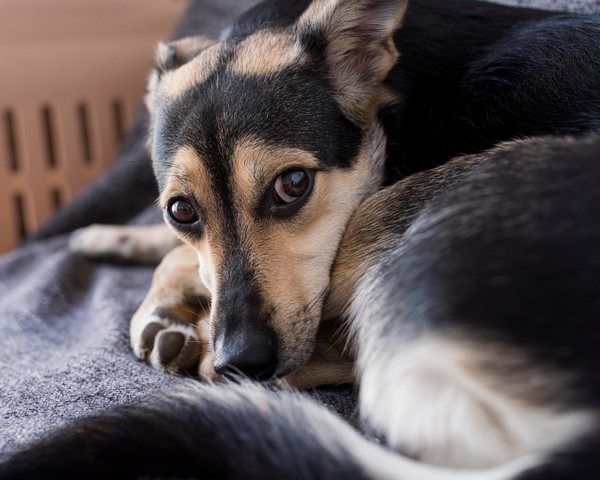
Stress is a physiological and behavioral response to an immediate threat or challenging situation. When the stressor is removed, the stress typically subsides. In contrast, anxiety is the anticipation of future dangers, resulting in bodily reactions even when no immediate threat exists.
| Stress | Anxiety | |
|---|---|---|
| Trigger | An immediate threat or challenging situation | Anticipation of future dangers |
| Duration | Typically subsides when the stressor is removed | Can occur even when no immediate threat exists |
| Body response | Physiological and behavioral response | Bodily reactions without an immediate threat |
Signs of Stress in Dogs
Stress can develop further into severe anxiety symptoms. Timely intervention and addressing stress can help avoid anxiety episodes.
Subtle signs of stress in dogs
Here are a few subtle signs that may need immediate attention.
| Subtle Sign | What It Indicates | Context |
|---|---|---|
| Prolonged yawning | Stress-induced, not sleepiness | Differs from tired yawns; more intense and frequent |
| Panting | Can be an anxiety response, not just overheating | Occurs indoors or in cool settings without exercise |
| Lip licking | Apprehension or discomfort | Repeated, rapid licking even when the mouth is dry |
| Dilated pupils / whale eye | Heightened alertness or fear | “Whale eye” – visible whites of eyes showing |
| Ears pinned back | Submission or fear | Ears folded against the head, pulled down |
| Drooling | Nervous system activation | Excessive, unexpected salivation |
| Displacement behaviors | Nervous habits | Air-sniffing, “shake it off” motion, scratching the collar area |
| Pacing or fidgeting | Restlessness | Walking back and forth repeatedly |
If you fail to notice these subtle signs, they can lead to more obvious signs.
Obvious signs of stress in dogs
You may also notice a few physiological changes that only a vet can identify.
Physiological signs
- Elevated heart rate (tachycardia) and rapid breathing (tachypnea)
- Increased salivation or excessive drooling
- Changes in body posture – Stiffening, rigid stance, or collapsed posture
- Piloerection – Fur standing on end, creating a “hackle” appearance
- Sudden eliminations – Urination or defecation due to loss of sphincter control
Separation Anxiety in Dogs – A Specialised Canine Stress Condition
Separation anxiety is one of the most common specific anxiety disorders in companion dogs. Yet, many owners mistake it for poor behavior rather than recognizing it as a genuine mental health condition.

What is Separation Anxiety?
Separation anxiety refers to a situation where your dog comes under severe stress when left alone and separated from the owner. Unlike normal sadness at departure, separation anxiety creates such intense fear that dogs engage in destructive, dangerous, or self-injurious behaviors.
Some common reasons that can make your dog more prone to separation anxiety include –
Behavioural signs of separation anxiety
When your dog is experiencing separation anxiety, it will show specific behavioral changes.
Signs of separation anxiety
- Destructive behavior, specifically when alone (chewing doors, crates, windows)
- Excessive vocalization (barking, howling, whining) during absence
- House soiling or urine marking despite being housetrained
- Pacing and restlessness before the owner departs
- Attempts to escape or follow the owner to the door/car
- Self-injurious behavior (breaking teeth, lacerating paws, attempting escape)
- Refusing to eat or showing loss of appetite when alone
- Extreme distress signals when the owner prepares to leave (panting, drooling, pacing)
Natural Remedies for Dog Anxiety
Well, if you notice any signs of anxiety in your dog, it is advisable to talk to your vet first. Of course, there is an expansive market of products that claim to cure separation anxiety. The following natural remedies are commonly used, but evidence varies, so use them only with your vet’s guidance.
| Remedy | What it is | Key points |
|---|---|---|
| CBD oil and hemp products | Cannabis-derived compound | Early studies suggest possible benefits, but research is limited. Dose depends on weight, age, and health. Check local laws. |
| L-Theanine | An amino acid from the tea plant | Often used for relaxation without sedation. Excess amounts may cause over-sedation or lethargy. |
| Valerian root | A widely recognized herbal sedative | Can take a few weeks to show effect. Often combined with scullcap. |
| Chamomile | A calming herb | Used for stress and anxiety-related digestive upset. Use only vet-approved products. |
| Probiotics | Gut-supporting bacteria | Used for the “gut-brain axis”. May indirectly support overall health. |
CBD Oil and Hemp Products
CBD interacts with the endocannabinoid system, which is involved in regulating mood. Some early studies have reported positive results for anxiety management, alongside applications for pain, seizures, and other conditions, but research is still limited.
However, it is essential to consult your vet before you introduce CBD. The dosage depends on multiple factors like weight, age and health conditions of your dog. CBD and cannabis products are regulated in many countries, so check the laws in your area.
L-Theanine
It is an amino acid derived from the tea plant. The remedy has attracted substantial veterinary attention for anxiety management. L-theanine is thought to modulate GABA, serotonin, and dopamine while inhibiting glutamate (the brain’s main excitatory neurotransmitter). This combination is believed to promote relaxation without sedation.
L-theanine is generally safe when given at appropriate doses. Excessive amounts may cause over-sedation or lethargy. Always follow veterinary guidance.
Valerian Root
Valerian root is one of the most widely recognized herbal sedatives, used for centuries in human and veterinary medicine. It is generally considered safe and may help calm your furry friend’s nervous system. It can be a good choice if your dog displays a high degree of excitement.
However, valerian root can take a few weeks to show effect. Scullcap & Valerian tablets are commonly used as a combination therapy for stress and anxiety in dogs.
Chamomile
Chamomile is used as a mild sedative and antispasmodic, which makes it a popular choice for anxious dogs. It encourages the body to relax while reducing stress symptoms. Its antispasmodic properties may specifically help dogs who experience vomiting or diarrhea triggered by anxiety.
It is typically considered for dogs experiencing car anxiety or motion sickness, where stress and digestive upset coincide. It is available as a hydrosol (water-based), essential oil (used in diffusers or sprays), or as part of herbal blends.
Probiotics
Probiotics are generally used for treating gut issues. But they are also used for controlling anxiety symptoms in dogs. In fact, the theory behind their use lies in the well-known “gut-brain axis.”
Dogs with anxiety often experience digestive upset. Probiotics that support healthy gut flora may indirectly benefit anxiety by improving overall health and immune function.
Behavioural Training – The Best Remedy
The natural remedies that we have cited above help ease the symptoms of dog anxiety. But behavioural training for your dog can help you achieve lasting change.
Here are a few steps that can help you –
Separation Anxiety Practice Plan
- Reward calm behavior
- Keep routines predictable
- Use reward-based training
- Increase exercise and enrichment
- Punish anxiety-related behavior
- Make big drama of departures and arrivals
- Give supplements or human medicines without asking your vet
- Force your dog past its comfort threshold
Exercise & Environmental Enrichment
Exercise triggers endorphin release, decreases cortisol, and increases serotonin. This is nature’s anxiety solution. In fact, physical activity has been regarded as nature’s best anxiety reliever.
Here are a few recommendations to help your dog reduce anxiety symptoms –
- Balance exercise with adequate rest.
- Add enrichment such as sniff walks, puzzle feeders, and chew toys.
Medical Considerations: When to See Your Veterinarian?
While natural remedies and behavioral training are valuable, some situations require professional veterinary evaluation.
Consult your veterinarian if
- Anxiety symptoms significantly impact quality of life
- House soiling occurs despite previous house training
- Destructive behavior is severe or self-injurious
- Aggression or reactivity is present
- Behavioral interventions alone aren’t producing improvement
- Anxiety appeared suddenly (rule out underlying medical conditions)
- You’re considering any supplements or medications
Conclusion
Dog anxiety is a huge concern in dogs. If you want to treat it, several methods are available. They include identifying and addressing medical causes, implementing behavioral modification through desensitization and counterconditioning, providing regular physical exercise, offering environmental enrichment, and using natural remedies or vet-prescribed medications.
Your anxious dog’s quality of life—and your own—improves dramatically when stress is properly addressed. The investment in understanding, training, and supporting your dog’s mental health strengthens the human-animal bond while creating a calmer, more confident companion.
✓Stress is a response to an immediate threat. Anxiety is the anticipation of future dangers.
✓Notice subtle signs early: yawning, lip licking, panting, pinned ears, and pacing.
✓Separation anxiety is a genuine condition, not poor behavior. Never punish it.
✓Behavioral training, exercise, and enrichment are the foundation. Supplements are only a support.
✓Always ask your vet before CBD, L-theanine, valerian, chamomile, or any supplement.
✓See your vet for sudden, severe, aggressive, or self-injurious behavior.
Frequently Asked Questions (FAQs)
What is the difference between stress and anxiety in dogs?
Stress is a physiological and behavioral response to an immediate threat or challenging situation, and it typically subsides when the stressor is removed. Anxiety is the anticipation of future dangers, which causes bodily reactions even when no immediate threat exists.
What are the subtle signs of stress in dogs?
Subtle signs include prolonged yawning, panting indoors without exercise, repeated lip licking, whale eye, ears pinned back, unexpected drooling, displacement behaviors like air-sniffing or shaking off, and pacing or fidgeting.
What are the obvious signs of anxiety in dogs?
Obvious signs include loss of appetite, tail tucking, cowering, trembling, excessive barking or whining, hiding, diarrhea or house soiling, destructive behavior, and aggression.
What is separation anxiety in dogs?
Separation anxiety is a condition in which a dog comes under severe stress when left alone and separated from its owner. Unlike normal sadness at departure, it creates such intense fear that dogs may engage in destructive, dangerous, or self-injurious behaviors. It is a genuine mental health condition, not poor behavior.
What increases a dog’s risk of separation anxiety?
Risk factors include adoption from a shelter or being found as a stray, early weaning, a lack of early socialization, unstable routines, excessive dependence on the owner, punishment-based training, and unpredictable absences. Some studies suggest males may be more prone.
Are natural remedies safe for dog anxiety?
Some natural remedies, such as L-theanine, valerian root, chamomile, probiotics, and CBD, are commonly used, but evidence varies and doses depend on your dog’s weight, age, and health. Always talk to your vet before using any supplement.
Is CBD safe for dogs with anxiety?
Some early studies suggest benefits, but research is limited. Consult your vet before giving CBD, because the dose depends on your dog’s weight, age, and health. CBD and cannabis products are regulated in many countries, so check the laws in your area.
How long does valerian root take to work for dogs?
Valerian root can take a few weeks to show its effect. It is sometimes used in combination with scullcap. Always follow your vet’s guidance on dosage.
Does exercise help with dog anxiety?
Yes. Exercise triggers endorphin release, decreases cortisol, and increases serotonin. Aim for at least 1-2 walks a day (about 1 hour in total), with 2+ hours for high-energy breeds. Consistency matters more than intensity, and balance it with adequate rest.
Can probiotics help with dog anxiety?
Probiotics are generally used for gut issues, but they may indirectly help anxiety through the “gut-brain axis” by supporting healthy gut flora, overall health, and immune function.
When should I take my anxious dog to the vet?
See your vet if anxiety significantly affects quality of life, house soiling occurs despite house training, destructive behavior is severe or self-injurious, aggression or reactivity is present, behavioral training is not helping, anxiety appeared suddenly, or you are considering any supplements or medications.
🐕 Was this helpful? Share it with a fellow dog owner, or tell us in the comments how you help your anxious dog.
This article is for general information only and is not a substitute for professional veterinary advice. Always consult your vet before giving your dog any supplement, herb, or medication.