Dog owners know how overwhelming it can be to choose the right food for their dogs. If you visit any pet shop, you will discover dozens of brands, flavors, and formulas that claim to be the best.
So, how do you know which one is really good for your dog?
The thing is, not all dog foods are created equal. What is effective with one dog might not be effective with another. The nutritional requirements of your dog are affected by age, breed, weight, and health conditions.
In this guide, we will take you through all you need to know about the best dog food.
How to Choose the Best Dog Food in 6 Simple Steps
Why the Dog Nutrition Guide Matters More Than You Think
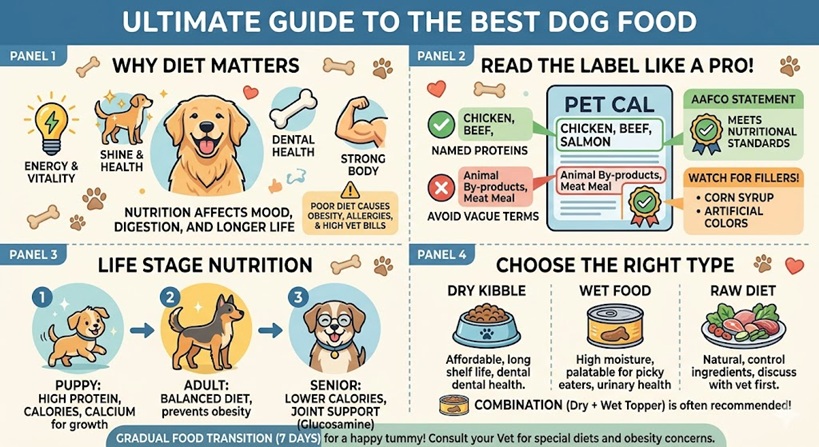
Your dog’s diet affects many aspects, including energy levels, coat shine, digestion, and even mood. Unhealthy nutrition may result in obesity, dental issues, allergies, and a reduced life expectancy.
Dogs require six essential nutrients for their optimal growth and body needs: protein, fat, carbohydrates, vitamins, minerals, and water. They all have a given role to play in ensuring that your dog is healthy and active.
Skipping the research and just grabbing the cheapest bag off the shelf might save money in the short term. But vet bills from diet-related issues can cost far more in the long run.
Understanding Dog Food Labels
Most dog food packaging can be misleading. Reading a dog food label becomes much easier if you read it like a mini recipe book.
Look for a named protein source first. Ingredients like “chicken,” “beef,” or “salmon” at the top of the list are a good sign. Avoid vague terms like “meat meal” or “animal by-products” as the primary ingredient.
Check for the AAFCO statement. The Association of American Feed Control Officials sets nutritional standards for pet food. A food label stating that it complies with AAFCO guidelines indicates that the food has been tested or formulated to meet the minimum nutritional requirements.
Life Stage Matters: Puppy, Adult, or Senior?

Life-stage feeding is one of the most important recommendations vets give.
- Puppies require additional protein, calories, and calcium to sustain high growth. Look for food labeled for puppies or for all life stages.
- Adult dogs require a balanced diet that neither overfeeds nor underfeeds. Excess calories may cause obesity, which impacts the joints and the heart.
- Older dogs tend to benefit from lower-calorie food with added joint supplements such as glucosamine. Their metabolism also decreases, and their nutritional requirements also change.
Always check the label to see whether the food suits your dog’s life stage, so you can be sure you are feeding your pet healthy dog food at the right time.
Wet Food vs. Dry Food vs. Raw Diet
| Food Type | Best For… | Pros | Cons |
|---|---|---|---|
| Dry Kibble | Busy owners & dental health | Affordable, shelf-stable, easy to store. | Lower moisture content; less flavorful. |
| Wet Food | Picky eaters & hydration | High moisture, very palatable, easy to chew. | More expensive, spoils quickly once opened. |
| Raw Diet | High-energy & ingredient control | Natural ingredients, shiny coat, smaller stools. | Risk of bacteria; difficult to balance nutrients. |
It is one of the most common questions pet owners ask, and the answer depends on your dog.
- Dry kibble is the most common and easily accessible option. It is affordable, has a long shelf life, and can help keep teeth clean by reducing tartar build-up. Most healthy dogs do well on a good dry food diet.
- Wet food contains more moisture, which is ideal for dogs who do not drink enough water or who have urinary system issues. It is also more palatable for picky eaters and for dogs that have dental problems or are aged.
- Raw diets are gaining more and more popularity. Raw meat can carry bacteria, which is a risk not only to your dog but to your family as well. If you are interested in a raw diet, remember to talk with your vet to make sure it is safe and balanced.
A combination of kibble and wet food is the most commonly suggested option: vets will often recommend a mostly-dry food mix, with wet food as a topper or treat now and then.
What Dog Food Ingredients to Look For and What to Avoid?
Good ingredients to keep in mind:
- Proteins with names (chicken, turkey, lamb, fish)
- Vegetables in general (sweet potato, peas, carrots)
- Healthy fats (fish oil, flaxseed)
- Natural preservatives (vitamin E, rosemary extract)
Ingredients to avoid:
- Unnatural colors (Red 40, Yellow 5)
- BHA and BHT (preservatives)
- Added corn syrup or sugar
- Unnamed, generic fats or proteins
If you cannot identify an ingredient on the food label, there is a higher chance that your dog will struggle with it as well.
Special Diets: When Generic Isn’t Enough
Some dogs have special health needs that require specialized food.
- Dogs with food allergies may need a limited-ingredient diet that cuts out common triggers like chicken, beef, dairy, or wheat. Signs of a food allergy include itchy skin, ear infections, and digestive upset.
- Prescription dog food is often required to treat diseases like kidney disease, diabetes, and heart conditions in dogs. These should only be prescribed by a vet, and you should never choose them without professional advice.
- Overweight dogs can be given weight management formulas that contain less fat and fewer calories but remain filling and nutritious.
When your dog has chronic health problems, it is important to find the appropriate vet team. That’s why many pet parents are now turning to professionals for guidance.
If you are a pet nutritionist, you can explore veterinarian jobs to see new openings.
How Much Should You Feed Your Dog?
Portion control is just as important as quality. Obesity can be a consequence of overfeeding, even on healthy food.
A dog feeding guide based on weight is printed on most dog food bags. But these are only estimates, not rules. Your dog’s activity level, age, and metabolism determine how much food they actually need. Vet-recommended dog food is the best choice.
As a simple check, learn how to feel your dog’s ribs: apply light pressure, without pressing hard. If you are unable to feel them, your dog might be overweight.
When in doubt, ask your vet to develop a suitable diet plan. It only takes a few minutes and can make a big difference.
Signs Your Dog’s Food Is Working (and When to Call Your Vet)
Signs the food suits your dog
- A healthy weight, with ribs you can feel under light pressure
- A shiny coat and steady energy levels
- Regular, healthy digestion
Talk to your vet if you notice
- Itchy skin or repeated ear infections
- Ongoing vomiting or diarrhea
- Your dog refusing food for more than 48 hours
- Sudden weight gain or loss
Switching to New Dog Food
Do not change the food of your dog overnight. Sudden changes can result in vomiting, diarrhea, and loss of appetite.
The correct way to do it:
| Days | Old food | New food |
|---|---|---|
| Days 1–2 | 75% | 25% |
| Days 3–4 | 50% | 50% |
| Days 5–6 | 25% | 75% |
| Day 7+ | 0% | 100% |
This gradual transition gives your dog’s digestive system time to adapt. See your vet if any issues persist beyond a week.
Conclusion
It does not need to be complex to select the most appropriate dog food. Start with the basics: look for named proteins, check the life stage on the label, and avoid unnecessary fillers and artificial additives.
It is up to you to make smart decisions for your dog. Taking some time to read labels and understand what is in them is a big step toward helping them live longer, healthier, and happier lives.
Your best resource when in doubt is your veterinarian. A single phone call can save you months of experimentation and help your dog enjoy a diet that best suits them.
✓Choose an AAFCO-compliant food with a named protein listed first.
✓Match the food to your dog’s life stage: puppy, adult, or senior.
✓Dry, wet, and raw diets each have pros and cons; a mostly-dry mix with wet food as a topper is commonly suggested.
✓Avoid artificial colors, BHA/BHT, added corn syrup or sugar, and unnamed fats or proteins.
✓Switch foods gradually over about a week.
✓Ask your vet about special diets and chronic health problems.
Frequently Asked Questions (FAQs)
What is the healthiest dog food (vets recommended)?
Vets generally recommend a nutritionally balanced, AAFCO-compliant food with a named protein and no artificial additives. Brands like Hill’s, Royal Canin, and Purina Pro Plan are usually recommended by vets because of their research-based formulations.
Does dog food without grains improve the health of dogs?
Not necessarily. Grain-free diets have gained popularity, and the FDA has investigated a possible link between grain-free food and heart disease (dilated cardiomyopathy) in a small number of dogs. Most vets recommend foods with healthy whole grains, like brown rice or oats, unless your dog has been diagnosed with a grain allergy.
Can my dog be fed homemade food instead of commercial dog food?
It is possible to make healthy homemade dog food; however, it is extremely hard to balance the nutrition correctly without professional advice. Dogs on an incomplete diet can develop deficiencies in calcium, phosphorus, and essential vitamins. If you want to make your own food, work with a board-certified veterinary nutritionist to create a balanced recipe.
How often should you change your dog’s food?
You do not need to change your dog’s food regularly unless there is a health reason or your dog is moving to a new life stage. Frequent changes can make dogs fussy eaters and upset the digestive system. It is better to stay with a formula that works and switch gradually when the time comes.
What should I do if my dog does not like the new food?
First, make the switch gradual; sudden changes are one of the biggest reasons dogs turn down new food. You can also add some wet food or a dog-safe topper to make it more appealing. If your dog refuses to eat for more than 48 hours, visit your veterinarian to rule out any underlying health issue.
How do I read a dog food label?
Check that a named protein source (like chicken, beef, or salmon) is listed first, look for an AAFCO statement, and make sure the food matches your dog’s life stage. Avoid fillers, artificial colors, and unnamed generic fats or proteins.
What is the best dog food for puppies?
Look for food labeled for puppies or for all life stages. Puppies need additional protein, calories, and calcium to support their fast growth.
How many times a day should I feed my dog?
Most adult dogs do well with two meals a day, while young puppies usually need three to four smaller meals. Your vet can recommend the right schedule for your dog’s age, size, and health.
🐕 Was this helpful? Share it with a fellow dog owner, or tell us in the comments what you feed your dog.
This article is for general information only and is not a substitute for professional veterinary advice. Always talk to your vet before changing your dog’s diet, especially if your dog has health problems.