Imagine this: you have a pet dog, and it begins whining at 2 am. You get up and find he has a deep gash in his paw. The vet is not available right now, and an emergency service is 45 minutes away. This is a scenario many pet owners come across more than once.
Having a proper pet first-aid kit ready and knowing how to use it can save you from predicaments. This does not mean we do not care for our pets. We spend hours looking for the best food, toys, and every other requirement. But when it comes to emergencies, we fail.
A 2023 survey by the UK charity PDSA found that 80% of pet owners did not own a pet first aid kit, and more than 90% had received no pet first aid training (source: Veterinary Nursing Times).
This guide addresses this very lack of knowledge.
At Dreamy Mammals, we’ve covered cat behaviors, dog body language, and fish tank ethics extensively. But emergencies don’t wait for perfect conditions. We decided to fill this gap and help you learn how to use pet first aid supplies.
Why Your Pet First Aid Kit Belongs in the Kitchen Drawer
Most people think first aid kits belong in cars or bathrooms. Wrong. Your pet’s first-aid kit lives in the kitchen drawer next to the emergency phone list.
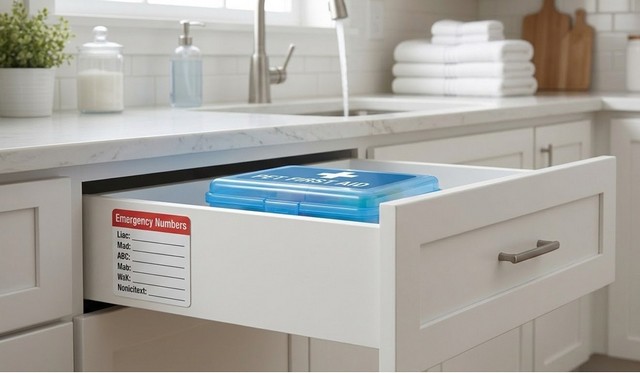
Keep these points in mind about pet first aid kits –
- Many emergencies happen indoors – These include chewed electrical cords, cut paws on broken glass, and allergic reactions to table scraps.
- The kitchen has running water, good lighting, and clean towels – In practice, it has everything you need for wound cleaning.
- You’re there multiple times daily – The easy access beats “I know it’s somewhere in the garage.”
- In an emergency, the first few minutes matter
- The nearest emergency vet can be 45 minutes away or more
- Having the kit ready helps you stabilize your pet faster
The Core 15 Items: What Goes in Every Pet First Aid Kit
In any emergency, the first 15 minutes are absolutely crucial. That is why you should always keep these important items ready in your kit.
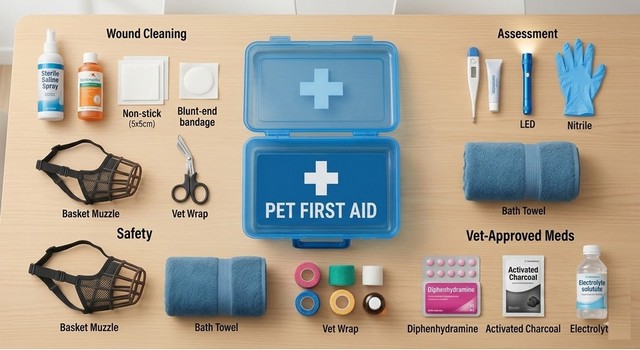
Wound Cleaning and Dressing
These items help clean wounds and stop bleeding. They should be a must in your pet’s first aid kit.
Avoid hot water on wounds. A sterile saline solution helps flush out the wound without introducing bacteria. Spray directly into cuts, eyes, or mouth injuries. You can use it for up to two years when unopened.
Chlorhexidine is one of the most commonly used antiseptics for pets. If you use betadine (povidone-iodine), dilute it 1:10 with water. It should become straw-colored, not orange. It dries clear and helps kill bacteria around the wound.
Regular gauze sticks to blood clots, which can be very dangerous. Non-stick pads let clots form naturally. Vet wrap is another excellent option that secures your dressing without sticking to the fur. Wrap it snugly, but not tightly.
They help you cut the bandages and tape without poking your pet.
Assessment and Monitoring Tools
These tools help in the proper management and assessment of wounds and other emergency needs.
Remember that a normal dog temperature is 100.5-102.5°F (38-39.2°C). Anything under 99°F or over 104°F can signal an emergency. Look for pet-safe KY jelly or vaseline for lubrication.
These are used to check gum color. The gum color should be bubblegum pink. You can use these penlights to check pupil response and wound depth.
They can be helpful in protecting you from bites. The gloves also help prevent bacteria from your hands getting into your pet’s wounds.
Restraint and Safety Equipment
These are additional pet safety items that help keep your pet safe.
It should be an essential item during emergencies. In fact, muzzles are highly recommended for dogs. Remember that pain can make even the sweetest dog or cat bite. Practice with your pet regularly, and reward them with treats even when there is no emergency.
Never muzzle a pet that is vomiting, struggling to breathe, or unconscious.
This one is self-explanatory. It can be used to swaddle small cats and dogs, and a burrito wrap is another good option to consider.
These can be useful for controlling panicked dogs and cats. Use them gently and never pull hard.
Emergency Medications (Vet-Approved Only)
These medications can help in an emergency. Make sure they are approved by your vet, and never self-medicate your pet.
Vets sometimes recommend plain diphenhydramine for mild allergic reactions and vaccine reactions. Always confirm the dose with your vet first, and use only tablets with no other ingredients. Swelling of the face, trouble breathing, or collapse is an emergency: go to the vet straight away.
It can help absorb some toxins that your pet has swallowed. Only give it if your vet or a poison control service tells you to, because it is not right for every poison. It is advisable to consult your vet before using any of these medicines.
The solution can help if your pet is mildly dehydrated. It does not replace veterinary care: a pet in shock needs a vet immediately.
Emergency Contacts
Write down your vet’s number, the nearest 24-hour emergency clinic, and an animal poison control hotline. Keep the card inside the kit.
- Local pharmacies: Chlorhexidine, Benadryl, gloves, scissors
- Amazon Prime: Saline spray, vet wrap, digital thermometer (2-day delivery)
- Pet stores: Muzzles, slip leashes, non-stick pads
- Vet clinic: Activated charcoal, electrolyte packets (call ahead)
What Should You Never Include in a Pet First Aid Kit?
There are a few things that should never be part of your pet’s first-aid kit.
Avoid medications like ibuprofen and paracetamol/acetaminophen. They can seriously damage the kidneys and liver within hours.
A few examples are Dettol, Savlon, and alcohol. They can burn living tissue.
They can target the wrong bacteria. These medications also have a resistance risk.
These remedies can have unpredictable reactions, and some essential oils are toxic to pets.
When Each Item Saves the Day
Dog nail quick bleeding
Cat eye injury
Swallowed toy string
Allergic reaction
Ready to Build Your Kit Today?
Your pet looks at you with complete trust during panic. That 2 AM bleeding paw, that choking toy, that heatstroke collapse—they all happen when vets sleep. Having this kit ready transforms helpless panic into competent action, buying precious minutes of stabilization.
Build your pet first aid kit today, and we are sure it will help you handle emergencies with confidence.
✓Keep the kit in the kitchen drawer next to your emergency phone list.
✓Stock 15 items: wound care, assessment tools, restraint items, vet-approved medications, and an emergency contact card.
✓Never put human painkillers, strong antiseptics, leftover antibiotics, or essential oils in the kit.
✓Check the kit weekly and replace expired items every six months.
✓Always call your vet or poison control in an emergency.
FAQs
What should be in a pet first aid kit?
A pet first aid kit should include wound-cleaning and dressing supplies (sterile saline, antiseptic, non-stick pads, vet wrap, bandage scissors), assessment tools (digital thermometer, penlight, nitrile gloves), restraint items (basket muzzle, towel, slip leash), vet-approved emergency medications, and an emergency contact card.
Where should I keep a pet first aid kit?
Keep it in a kitchen drawer next to your emergency phone list. The kitchen has running water, good lighting, and clean towels, and you pass through it several times a day, so the kit is always easy to find.
What should I never put in a pet first aid kit?
Avoid human painkillers like ibuprofen and paracetamol/acetaminophen, strong antiseptics like Dettol, Savlon, and alcohol, random leftover antibiotics, and essential oils or holistic remedies.
What is a normal temperature for a dog?
A normal dog temperature is 100.5-102.5°F (38-39.2°C). Anything under 99°F or over 104°F can signal an emergency.
Can I give my dog Benadryl?
Vets sometimes recommend plain diphenhydramine for mild allergic reactions, but only at a dose your vet confirms. Swelling of the face, trouble breathing, or collapse is an emergency: go to the vet straight away.
How often should I replace kit items?
It is advisable to check the items every week. Expiry checks and replacements should be carried out once every six months. Saline solutions can last up to two years if unopened.
Can I use this kit for fish or small pets?
Typically, we would advise using fish-specific and pet-specific medications. It is a good idea to consult your vet or aquarium expert for detailed information.
🐕 Was this helpful? Share it with a fellow pet parent, or tell us in the comments what is in your pet first aid kit.
This article is for general information only and is not a substitute for professional veterinary advice. Always consult your vet before giving your pet any medication.