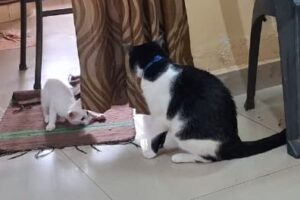
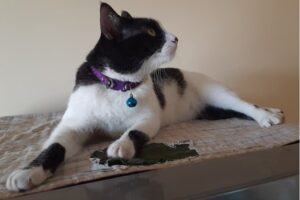
If you have a cat, you have probably seen it: you stroke your cat near the base of the tail, and up goes the rear end. Some cats lift just a little, while others go into a full “elevator butt” pose. It looks funny, but it is one of the clearest ways a cat talks to you.
5 Reasons Cats Lift Their Tail When You Pet Them

1. They are enjoying the attention
A raised tail is the cat’s way of saying, “Yes, right there.” If your cat leans into your hand and lifts its rear as you stroke, it is comfortable with you and wants you to carry on. Cats that dislike being touched there do the opposite: they twitch, flatten their ears, move away or turn to bite.
2. The base of the tail is very sensitive
The area at the base of the tail is rich in nerve endings, and cats cannot easily reach it themselves when they groom. Scratching it often feels good, and lifting the rear lets you reach the spot. Not every cat likes it, so go by your own cat’s reaction.
3. They are sharing their scent
Cats have scent glands around the tail base and rear. Raising the tail, rubbing against you, or winding a tail around your leg all spread the cat’s scent onto you. It is a friendly “you belong to my group” signal. It is also why cats that know each other greet each other with a raised tail and a sniff.
4. It is a kitten habit
A mother cat licks her kittens’ rear ends in the first weeks of life to stimulate them to go to the toilet. Kittens learn that a touch near the tail base is comforting, and many adult cats keep the same reaction when a trusted person strokes that area.
5. An unspayed female may be in heat
A female cat in heat often crouches at the front, lifts her hindquarters and moves her tail to one side. This is not the same as ordinary tail-lifting, because it comes with other signs:
- Loud, persistent calling or howling
- Rubbing, rolling and asking for much more affection than usual
- Spraying urine around the house
- Trying to escape outdoors
Male and spayed cats also lift their tails when petted, so a raised tail alone does not mean heat. If you think your cat is in heat, ask your vet about spaying.
Why Do Cats Show You Their Bum?
Turning their back to you and lifting the tail can feel rude, but for a cat it is usually the opposite. Cats show their rear to cats and people they trust, and it often means:
- “I trust you.” Cats avoid turning their backs on anything they are afraid of.
- “Hello.” It is part of a friendly greeting between cats.
- “Please pet me.” Many cats back into your hand or your face to ask for attention.
Cats also sometimes wrap their tail around you. That is another form of greeting and scent-sharing, so a good moment for a gentle stroke.
Cat Tail Positions and What They Mean
A raised tail is only one of many tail signals. Always read the tail together with the ears, eyes and posture, as the RSPCA’s cat body language guide explains.
| Tail Position | What It Usually Means | What to Do |
|---|---|---|
| Straight up | Confident, happy, friendly greeting | Say hello, offer a gentle stroke |
| Up with a curved tip (question mark) | Relaxed, curious, often in a playful mood | A good time to play |
| Loosely out from the body | Calm and relaxed | Nothing needed |
| Low or drooping | Unsure, uneasy or unwell. Some cats naturally carry their tail lower, so compare with your cat’s normal | Look for other signs; see a vet if it is a sudden change |
| Tucked tightly under the body | Fear, worry, feeling unsafe | Remove the cause and give space |
| Puffed up (bottle brush) | Frightened or very agitated, trying to look bigger | Don’t touch; give the cat space |
| Slow swish | Focused on something, such as stalking a toy | Join in with play if that is what it wants |
| Fast lashing | Annoyed or overstimulated | Stop petting and back away |
| Wrapped around you or another cat | Affection, a “tail hug” that also shares scent | Enjoy the bonding moment |
When to see a vet
Call your vet if your cat:
- Suddenly cannot lift its tail, or the tail hangs limp
- Yelps, flinches or bites when the tail or lower back is touched
- Has sores, hair loss or swelling at the tail base
- Is unspayed and shows heat signs that are very frequent or distressing
Cats can also lose part of a tail through injury or illness. Our guide to why a cat’s tail can fall off explains the causes. A cat missing a tail, or born without one, still balances well.
Frequently Asked Questions
Why do cats put their bum in your face?
Where do cats like to be stroked the most?
Does a raised tail mean my cat is in heat?
Why does my cat wrap its tail around me?
Is it okay to touch a cat’s tail?
Why do cats have tails and whiskers?
The Bottom Line
When a cat lifts its tail as you pet it, it is almost always telling you that it is happy, comfortable and wants more. Learn your own cat’s favourite spots, read the tail together with the rest of its body, and stop when it asks you to.
Key Takeaways
- A cat that lifts its tail and rear when petted is usually enjoying it, showing trust and giving a friendly greeting.
- The base of the tail is nerve-rich, hard for cats to groom, and close to scent glands, so many cats love being stroked there.
- A raised tail alone does not mean heat. Look for loud calling, rolling, restlessness and spraying in unspayed females.
- Read the tail together with the ears, eyes and posture. A low, tucked or puffed-up tail means worry, fear or agitation.
- Stroke the base of the tail only, never pull the tail, and see a vet for a limp tail, flinching or sores.
Did you enjoy this post?
Does your cat lift its tail when you pet it? Tell us in the comments how your cat reacts, and share this post with another cat parent.
You may also want to read: