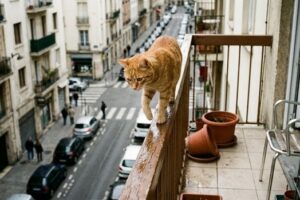
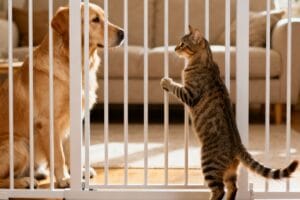
If you are a proud pet parent—and we bet you are, which is why you are here at Dreamy Mammals—there must be one thing that annoys you a lot. Yes, we are talking about the bathing time for your pet and how your pet hates it to the core! For most pet parents, be it dog owners or cat lovers, bathing time is a battleground in itself.
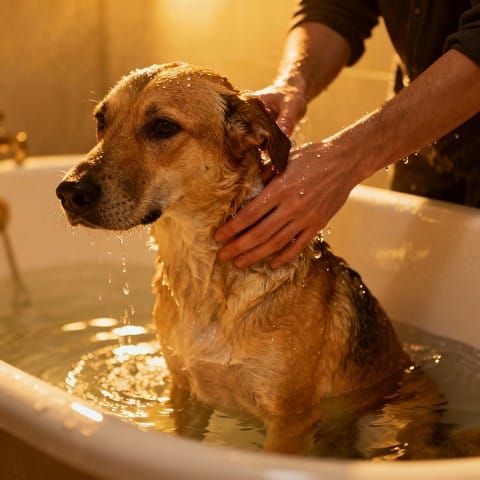
So, why do pets have bath time anxiety, and how can you transform this important routine into a pleasurable experience for your pet? Well, there are several ways you can strengthen the bond between you and your furry friend while making sure that your pet is healthy and clean.
Why Your Pet Hates Bath Time?
Well, there are multiple reasons that make pets anxious about bath time.
Physiological stress response
Research suggests that dogs go through a steep rise in their heart rate and respiratory rate during the bathing and drying phases. It is understood that they are not familiar with the bathwater and the pressure from blow dryers. This creates a stimulus that manifests itself in the form of physiological changes.
Common Triggers that Create Bath Time Anxiety
Understanding the key triggers should help you address the specific concerns that your pet may have. Instead of managing the symptoms, we at Dreamy Mammals believe that addressing the root cause makes more sense.
Species Specific Stress Response
Dogs and cats are not similar when it comes to their responses. You need to understand the exact response they show to similar stress triggers.
Why Dogs React Differently Than Cats?
Both cats and dogs have a different evolutionary background. Dogs have been known to exhibit overt stress signals. They manifest their stress through vocalisations like barking and whining. You may also find them showing signs of an escape attempt.
Dogs are generally more social than cats. That is why they show overt stress signals. They look up to their human companions when they are in uncertain conditions.
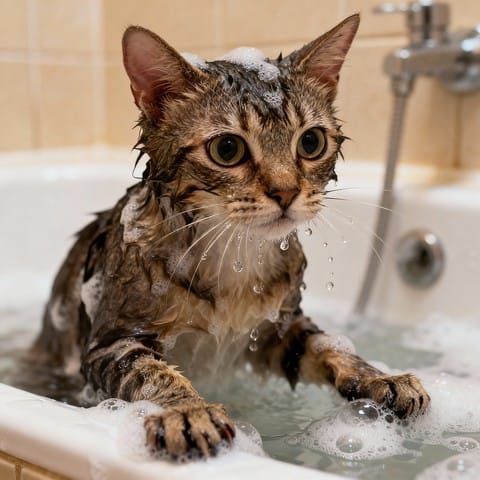
Cats, on the other hand, show very subtle stress signals. Cats generally freeze and become still when they are stressed out. This can indeed be misleading. Many cat owners think that their cat is quite cooperative when grooming.
- Whining, barking, or growling as communication attempts
- “Whale eye” appearance (showing white sclera around pupils)
- Tucked tail and lowered body posture
- Excessive panting and drooling
- Attempts to jump out of the tub or hide
- Flattened ears and tense facial muscles
- Dilated pupils and rapid blinking
- Excessive vocalization or complete silence
- Rigid body posture or “freezing” behavior
- Excessive grooming after the bath
How to Create a Positive Bath Environment for Your Pet – Step by Step Guide
You can employ a few strategies to make sure that your pet is not stressed out during the bathing schedule.
Pre-Bath Preparation Strategies
You can consider desensitising your pet so that it does not get stressed out during bathing.
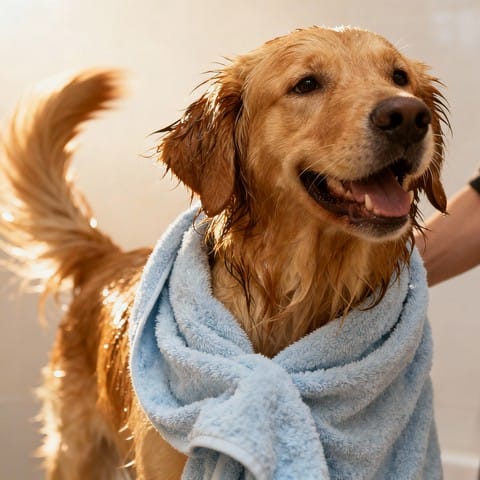
The 3-3-3 Bath Routine
Here is a simple 3-3-3 routine that you can follow for a more positive bathing experience:
Step-by-Step: How to Bathe an Anxious Pet
Common Mistakes to Avoid
There are a few mistakes that may make the bathing time more stressful for your pet. Avoid these mistakes so that your cat or dog is not overwhelmed.
Do You Really Need a Full Bath? Alternatives for Anxious Pets
Not every pet needs a full bath often. How often to bathe depends on your pet’s coat, activity, and skin, so ask your vet or groomer. For anxious pets, you can also consider:
Conclusion
It is not too difficult to transform the bath time experience for your pet from a stressful ordeal into a calm bonding experience. However, it involves building trust, ensuring health, and strengthening the bond you share with your furry companion. Understand this first – pets experience genuine physiological stress during bathing, but with proper techniques and patience, we can significantly reduce their anxiety while maintaining their hygiene needs.
Your patience and dedication to making bath time a positive experience reflects the deep care you have for your pet’s comfort and happiness. Every small victory—whether it’s your dog staying in the tub without struggling or your cat tolerating water without hissing—is a step toward a lifetime of easier grooming experiences. With time, consistency, and the right approach, bath time can evolve from your pet’s least favorite activity into a routine they approach with calm acceptance, knowing they’re safe in your caring hands.
✓Bath time stress comes from sensory overload, loss of control, slippery surfaces, and temperature sensitivity.
✓Dogs show stress openly. Cats show it subtly, and may freeze.
✓Prepare in advance: quiet space, familiar tools, treats, and exercise first.
✓Use a non-slip mat, lukewarm water, and a shampoo made for your pet.
✓Never rush, and watch for stress signals.
✓Consider wipes, waterless shampoo, or a groomer for very anxious pets.
Frequently Asked Questions (FAQs)
Why do pets hate bath time?
Pets hate bath time because of sensory overload (running water, shampoo smells, spray pressure), a feeling of loss of control, slippery surfaces, and temperature sensitivity. These can raise their heart rate, breathing rate, and stress hormones during bathing and drying.
Why does my dog hate baths?
Dogs often feel trapped in an unfamiliar situation. They may swim voluntarily, but being bathed feels like a loss of control. They show stress openly, with whining, barking, “whale eye,” a tucked tail, panting, drooling, and attempts to jump out of the tub.
Why does my cat hate baths?
Cats show subtle stress signals, such as flattened ears, dilated pupils, rapid blinking, and freezing. Many cat owners mistake a frozen cat for a cooperative one. Slippery surfaces, noise, and loss of control all add to the anxiety.
How can I make bath time less stressful for my pet?
Choose a quiet spot, use soft music or white noise, let your pet explore the grooming tools with treats nearby, exercise your pet first, never rush, use a pet-specific shampoo, and reward your pet afterwards.
Can I use human shampoo on my dog or cat?
No. Human shampoos should never be used on pets because of pH differences between human and animal skin. Cats particularly need shampoos formulated for felines, since their skin has a different thickness and acidity.
Should I exercise my pet before a bath?
It often helps. A tired pet is usually a calmer pet, and 15-20 minutes of exercise can help burn off excess energy that might show up as stress-driven behavior.
What are the signs my pet is stressed during a bath?
Dogs may whine, bark, growl, show whale eye, tuck their tail, pant, drool, or try to escape. Cats may flatten their ears, dilate their pupils, blink rapidly, freeze, vocalize or go silent, and groom excessively afterwards.
What is the 3-3-3 bath routine?
It is a simple routine: 3 minutes of pre-bath preparation, 3 main washing cycles (wet thoroughly, shampoo gently, rinse completely), and 3 minutes of post-bath reward time with positive reinforcement.
What water temperature is best for a pet bath?
Use lukewarm water, never hot. What feels comfortable to us may be too warm for pets, and the temperature needs of dogs and cats differ.
🐕 Was this helpful? Share it with a fellow pet parent, or tell us in the comments how your pet handles bath time.
This article is for general information only and is not a substitute for professional veterinary advice. If your pet has skin problems or is extremely fearful or aggressive, please consult your vet or a qualified behaviorist.