Bringing a new kitten home sounds adorable in theory. Two fluffy cats playing together, sleeping side by side, and filling the house with warmth—every pet lover imagines this perfect picture. But in reality, the first few days can be very different.
When I introduced a young kitten to my calm and well-behaved older cat, I quickly realized that cat relationships don’t form overnight. Instead, they grow slowly through curiosity, caution, and sometimes a little bit of hissing.
This is the story of how my older cat and a tiny kitten went from strangers to friends—and what their behavior taught me about feline communication.
Day 1: Curiosity Meets Suspicion
The first time my older cat noticed the kitten, she didn’t rush to welcome him. Instead, she watched carefully from a distance.
Cats are extremely territorial animals. When a new animal enters their environment, their first instinct is not friendship—it is assessment.
My older cat would:
- Watch the kitten quietly
- Approach slowly
- Suddenly hiss if he came too close
To a human observer, this might look alarming. But in cat language, a hiss simply means:
“I’m not comfortable yet. Please stay back.”
The kitten, being young and unsure, mostly responded by backing away.
This was actually a good sign.
Day 2–3: The Monitoring Phase
Over the next couple of days, something interesting began to happen.
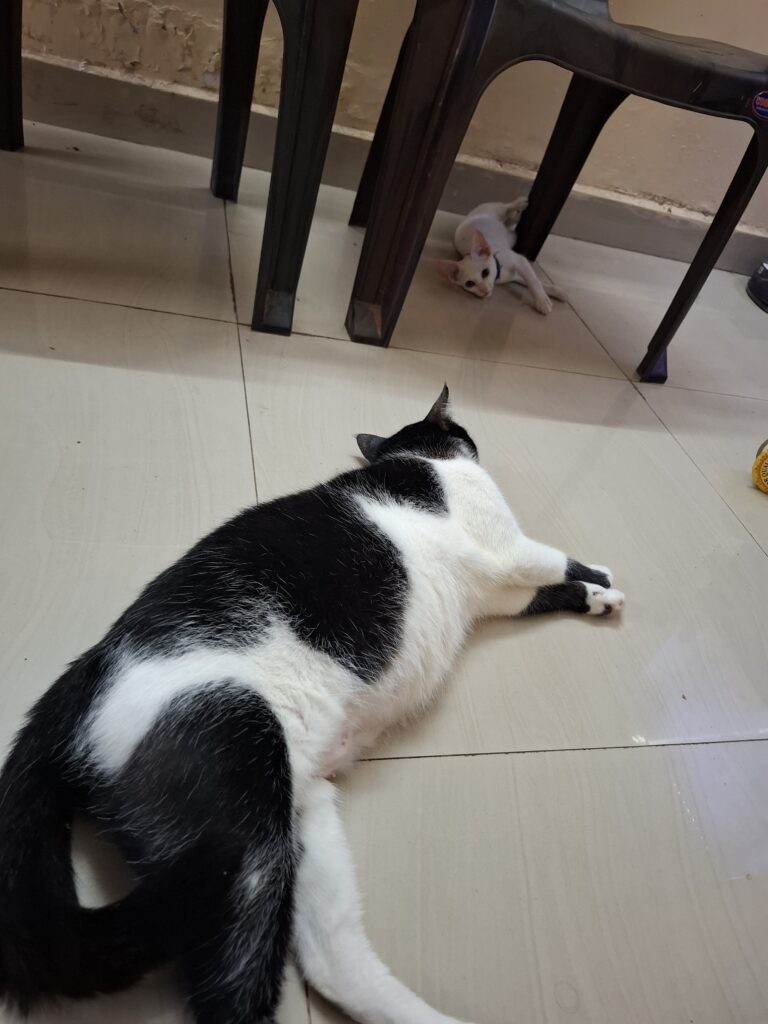
My older cat started following the kitten around the house.
At first, I thought she might be planning an attack. But that wasn’t the case at all.
She would:
- Follow the kitten from room to room
- Observe him from a distance
- Occasionally hiss if he approached too closely
Strangely, if the kitten disappeared from sight, she would go looking for him.
This is a behavior many cat owners notice during introductions. The older cat is not being aggressive—she is monitoring the newcomer and learning his habits.
It’s like a security officer making sure the new resident follows the rules.
The Occasional Paw Slap
Another behavior appeared during this stage: the quick paw slap.
Sometimes the kitten would get too curious and walk straight toward my older cat. When that happened, she would give him a swift tap with her paw and walk away.
At first, it worried me. But I soon realized something important.
The slap was controlled.
- No claws extended
- No loud growling
- No chasing afterwards
It was simply a feline way of saying:
“That’s close enough.”
Interestingly, the kitten understood the message perfectly. After being slapped, he would quietly move away rather than fight back.
In the world of cats, this is exactly how social order is established.
The Kitten Learns the Rules
One thing that helped the situation was the kitten’s behavior.
He showed the classic signs of a respectful young cat:
- If hissed at, he stepped back
- If slapped, he retreated
- He rarely tried to attack back
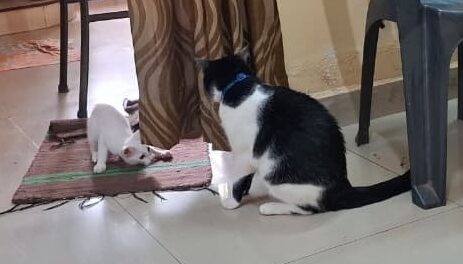
This submissive response helps prevent real fights. In many homes, kittens that challenge older cats too aggressively can trigger bigger conflicts.
Luckily, that wasn’t the case here.
Instead, the kitten slowly learned where he could go—and where he should not.
The Turning Point
A few days into the process, the atmosphere in the house began to change.
My older cat still followed the kitten around, but the hissing became less frequent.
Instead of reacting every time she saw him, she began to simply watch quietly.
This is one of the most important signs during cat introductions.
When a cat stops reacting emotionally and begins to observe calmly, it means the new cat is no longer viewed as a serious threat.
In other words, acceptance has begun.
The First Signs of Comfort
Soon, I noticed something else.
Both cats started spending time in the same room.
They weren’t sleeping together yet. They kept a comfortable distance. But they were clearly more relaxed.
The older cat would sit on one side of the room while the kitten played nearby.
Sometimes she watched him run around with mild curiosity instead of irritation.
This stage often surprises cat owners because it looks almost uneventful. But in feline relationships, peaceful coexistence is a huge step forward.
When Play Begins
A few days later, another interesting development occurred.
The older cat suddenly chased the kitten across the room.
For a moment it looked like a fight—but it ended within seconds. No screaming. No fur flying.
Just a short chase and then both cats went their separate ways.
This kind of behavior is often the beginning of playful interaction.
Cats test each other’s boundaries through chasing and light paw batting before true play develops.
The Moment Every Cat Owner Waits For
Eventually, the most beautiful moment happened.
My older cat approached the kitten calmly and began grooming him.
She gently licked the top of his head and ears.
For anyone unfamiliar with cat behavior, this might seem like a small gesture. But in the feline world, grooming is a powerful sign of trust.
Cats groom:
- Their family members
- Their close companions
- Animals they feel safe with
That moment made it clear to me: the kitten was no longer an intruder.
He had become part of the household.
What I Learned From This Experience
Introducing cats is rarely instant. It is a gradual process built on communication and patience.
Through this experience, I learned several important lessons:
A Happy Ending
Today, the two cats share the house comfortably.
The kitten still has bursts of playful energy, while the older cat maintains her calm and dignified personality.
They may not be inseparable companions every moment of the day—but they coexist peacefully, occasionally groom each other, and sometimes even nap in the same room.
Watching their relationship grow from cautious hissing to quiet friendship has been a rewarding experience.
For any pet owner introducing a new kitten to an older cat, remember this:
Friendship between cats is not forced—it is built slowly, one moment of trust at a time.
How to Introduce a Kitten to an Older Cat: 6 Quick Tips
The story above is how it went in my home. If you are about to bring a kitten home, these general tips can make the first days smoother.
Signs Things Are Going Well (and When to Step In)
Going well
- Watching without hissing
- Sharing the same room comfortably
- Passing each other without reacting
- Grooming or relaxed proximity
Normal, but keep an eye on it
- Occasional hissing when the kitten comes too close
- A quick, controlled paw slap with claws retracted, after which the cats separate calmly
Separate the cats and call your vet or behaviorist if you see
- Loud screaming or growling
- Extended claws and repeated strikes
- Chasing and biting, or a continuous attack
- Scratches or bite injuries
✓Cat friendships grow slowly, over days or weeks.
✓Hissing is a defensive signal, not always aggression. Never punish it.
✓A quick, controlled paw slap is usually boundary setting.
✓Watching calmly, sharing a room, and mutual grooming are signs of acceptance.
✓Screaming, extended claws, and chasing and biting mean real fighting. Separate the cats.
Frequently Asked Questions (FAQs)
How long does it take for an older cat to accept a new kitten?
It varies from cat to cat. In this story, the hissing faded within a few days, the cats stayed calmly in the same room within one to two weeks, and grooming began around weeks two to three. Most cat friendships develop slowly over days or weeks, so be patient.
Is it normal for my older cat to hiss at a new kitten?
Yes. Hissing is a defensive signal that means “I’m unsure about this situation” or “Don’t come any closer.” It is not always aggression, and punishing a cat for hissing can make introductions worse.
Why does my older cat slap the new kitten?
A quick, controlled paw slap with claws retracted is usually a way of setting boundaries. Older cats use it to teach kittens how close is too close. Repeated strikes, extended claws, or loud screaming are signs of real aggression.
How can I tell if my cats are playing or fighting?
Play fighting is mostly quiet, with loose, relaxed body language and breaks where the cats pause and separate. Real fighting involves loud growling or screaming, stiff, tense posture, continuous attack, and possible scratches or bites.
What are the signs that two cats are bonding?
Look for cats watching each other without hissing, sharing the same room comfortably, passing each other without reacting, and sitting a few feet apart peacefully. Mutual grooming is one of the strongest signs that two cats have bonded.
When should I separate my cats?
Separate them if you see real fighting: screaming, extended claws, chasing and biting, or a continuous attack. If the problem continues, or either cat stops eating or using the litter box, talk to your vet or a cat behaviorist.
This article shares a personal experience and general information. It is not a substitute for professional advice. If your cats are fighting or you are worried about their health or behavior, please consult your vet or a cat behaviorist.