Ever watched your cat squeeze into a tiny box, fold its paws like a loaf of bread, or stare at nothing? These are not just random quirks. Many cat behaviors are rooted in instinct, learning, environment, and individual personality, and they can offer useful clues about your cat’s mood, comfort, and needs.
In this comprehensive guide, we’ll decode some of the most interesting cat quirks covered in Dreamy Mammals’ popular posts, helping you understand and bond with your furry friend better.
- Why cats love cardboard boxes
- What the cat loaf position means
- Why a cat’s tail can become badly injured or require amputation
- Whether male cats are more affectionate than females
- Other common cat quirks, including bird chattering and bringing home prey
- When a change in behavior should prompt a veterinary visit
Why Do Cats Love Cardboard Boxes?
You might find your cat’s obsession with cardboard boxes cute. But it can be much more than that. A box can satisfy a cat’s instinct to seek a sheltered hiding place. If you imagine your home as a wild environment, a cardboard box resembles a small cave, burrow, or bush. From inside, a cat can observe its surroundings while remaining partly hidden.
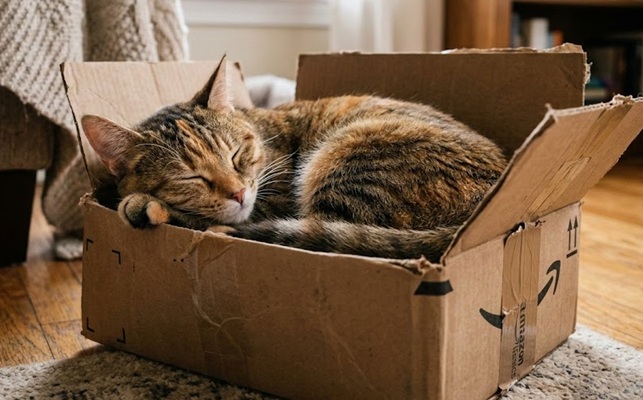
A Dutch study of shelter cats found that cats provided with hiding boxes showed lower stress levels and adapted more readily to interaction with people. That does not mean every cat needs a cardboard box, but it does support the value of giving cats access to safe hiding places.
There is more to the attraction. Boxes can help cats conserve body heat, provide a place for rest, and encourage play-hunting behavior such as pouncing from inside. Even a simple box can become a hiding place, lookout, sleeping spot, and play area.
Want a deeper look? Read Why Do Cats Love Cardboard Boxes? (Deep Dive) for more reasons behind this surprisingly common cat behavior.
The Cat Loaf: Why Does My Cat Fold Its Paws Under?
This one is a personal favorite. That adorable “loaf” position—paws tucked under the chest and the body shaped a little like bread—is usually associated with relaxation and comfort. Cats often loaf when they feel safe and settled. Tucking the paws underneath the body can also help conserve warmth while keeping the cat in a position from which it can move quickly if necessary.
Variations include the “sphinx loaf,” with the front paws extended, and the more complete “meatloaf” position, in which the head may be lowered. Cats of all ages can loaf, from kittens to seniors.
If your cat suddenly starts loafing more than usual and also appears tense, withdrawn, painful, or unwell, don’t assume the posture itself is the problem. Look for other changes in behavior and consult your veterinarian if something seems abnormal.
Read more in Why Does My Cat Fold Their Paws Under Them?
Why Can a Cat’s Tail Fall Off?
After those two quirky behaviors, this one is more concerning. A cat’s tail does not simply “fall off” as a normal part of aging. Severe injury can damage the tail’s bones, blood vessels, skin, or nerves and, in some cases, an injured section may need to be surgically amputated.
Door accidents, vehicle injuries, fights, bites, infections, frostbite, and other trauma can cause serious tail damage. Excessive grooming can also cause hair loss or skin injury around the tail, although that is different from the tail itself becoming detached.
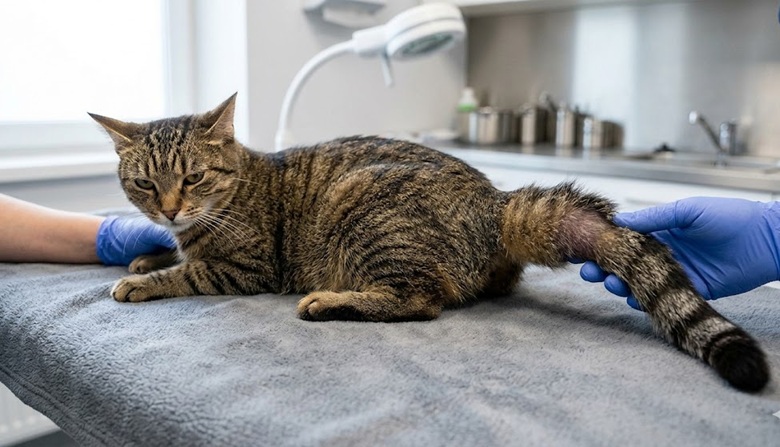
Some possible reasons for tail problems include:
| Cause | Possible signs | What may help |
|---|---|---|
| Trauma | Swelling, pain, dragging or a limp tail | Cat-proof the home and seek veterinary care after significant injury |
| Infection | Pus, swelling, odor, wounds or hair loss | Have wounds assessed and maintain appropriate flea and parasite control |
| Stress or excessive grooming | Chewing, licking and bald spots | Look for stressors and arrange a veterinary check if grooming is persistent |
For detailed cases and additional information, read Why Can a Cat’s Tail Fall Off?
Are Male Cats More Affectionate Than Females?
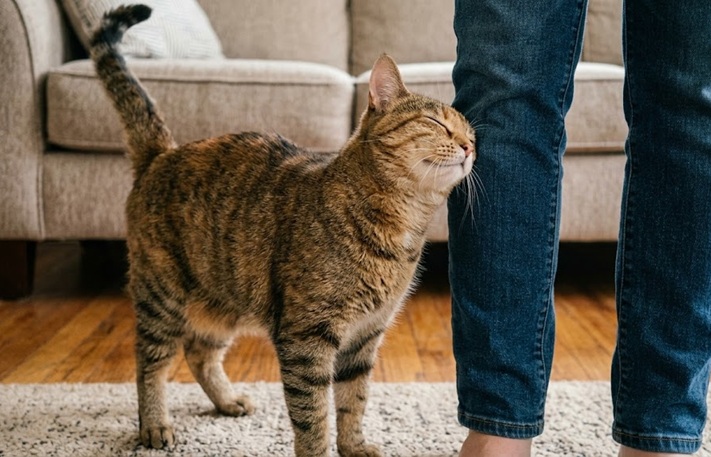
Not necessarily. Affection varies considerably from one cat to another and is influenced by personality, early socialization, environment, and whether the cat has been neutered or spayed. Some neutered males may appear especially cuddly, while many female cats are equally affectionate and enjoy sitting on laps, head-butting, or rubbing against their people.
Rather than assuming that sex determines personality, look at your individual cat’s behavior and history.
Want a more detailed gender-related behavior breakdown? Check out Are Male Cats More Affectionate Than Females?
Other Common Cat Quirks and What They Mean
When to Worry: Cat Behavior Health Red Flags
Most quirky behaviors are harmless. The bigger clue is often a sudden change from your cat’s normal routine. A cat that suddenly hides, becomes unusually aggressive, stops using the litter box, loses weight, grooms excessively, or seems lethargic may be experiencing stress, pain, or illness.
- Tail dragging, severe tail pain, bleeding, or loss of tail movement
- Difficulty urinating or repeated trips to the litter box
- Sudden weakness, collapse, severe lethargy, or breathing difficulty
- Persistent vomiting, major appetite changes, or unexplained weight loss
- Sudden aggression or a major change in normal behavior
FAQs About Cat Behaviors and Quirks
Why does my cat loaf but seem tense?
Loafing is often a comfortable resting position, but body language matters. If your cat also has flattened ears, a tense body, hiding behavior, appetite changes, or other signs of discomfort, consider stress or illness and speak with your veterinarian if the change persists.
Is a cat’s tail falling off painful?
A serious tail injury can be painful, although damaged nerves can alter sensation. A dragging, swollen, bleeding, or severely injured tail needs veterinary assessment because nerve damage can sometimes be associated with other problems.
Do all cats love boxes?
No. Many cats enjoy boxes because they provide hiding, resting, and play opportunities, but individual preferences vary. Some cats may ignore a box completely or enjoy it only for a short time.
Are male cats more affectionate than female cats?
There is no simple rule. Affection depends heavily on the individual cat’s personality, socialization, environment, and reproductive status. Both male and female cats can be extremely affectionate.
Why does my cat chatter at birds?
Bird chattering and teeth clicking are commonly associated with excitement and predatory arousal when a cat watches potential prey. It is generally a normal hunting-related behavior.
Why does my cat bring me dead animals?
Bringing home prey is a form of normal hunting behavior. Your cat may carry prey to a familiar or safe location. Avoid punishment and redirect hunting behavior toward interactive toys instead.
✓Many unusual-looking cat behaviors have normal instinctive or environmental explanations.
✓Cardboard boxes can provide cats with a secure hiding and resting place.
✓The cat loaf is usually a relaxed resting posture, but the rest of the body language matters.
✓A serious tail injury is not normal and can require urgent veterinary attention.
✓Male cats are not automatically more affectionate than females; individual personality matters more.
✓Sudden changes in behavior can be more important than a quirky behavior that has always been normal for your cat.
🐱 Was this helpful? Share it with another cat parent who has wondered about these strange behaviors, or tell us in the comments about your cat’s quirks.
This article is for general educational information and is not a substitute for veterinary diagnosis or treatment. If your cat has a sudden or severe change in behavior, injury, difficulty urinating, breathing problems, or other concerning symptoms, contact a veterinarian.