One of the world’s cleanest and most colourful freshwater aquarium fish is the peacock fish. They are popular among aquariums because of their colorful colors and active nature.
Its nature is peaceful compared with other kinds of cichlids. To keep a peacock fish aquarium healthy, vibrant, and stress-free, proper care is very important.
They are found in Lake Malawi in Africa. They are in high demand for aquariums due to their beautiful colors, easy care, size range, and variety of fish, making them among the most attractive freshwater fish for aquariums. Let’s discuss.
Peacock Fish – A few key facts
| Feature | Details |
|---|---|
| Origin | Lake Malawi, Africa |
| Scientific Name | Peacock Cichlid (Aulonocara spp.) |
| Average Size | 4 – 7 inches |
| Lifespan | 6 – 8 years |
| Temperament | Generally peaceful (controllable aggression) |
| Minimum Tank Size | 55 – 75 Gallons |
| Difficulty Level | Beginner-friendly |
Key qualities:
Peacock cichlids are typically peaceful and form a community in a tank.
- Nature: A bit aggressive yet controllable
- Environment: Clean, fresh water
- Standard Size: 4-7 inches
- Lifespan: 6-8 years with good care
What are peacock fish, and where are they found?
Peacock fish were found in Lake Malawi in East Africa.
This lake is home to hundreds of cichlid species. In the wild, peacock cichlids live in sandy areas near rocky walls, where they search for food using their extremely sensitive sensory pores.
Basic Natural Needs of Habitat:
By replicating conditions in home aquariums, aquarium keepers may improve the health and behavior of peacock fish.
- Sandy bottoms in lakes
- Cool freshwater
- Moderate water flow
- Rocky homes for safety
How big will a peacock cichlid get, and what tank size do they need?
Normally, male peacock cichlids grow bigger and show more vibrant colors than females.
Female peacock cichlids usually have dull colors like gray or brown, and they can easily hide in the wild environment.
Mostly peacock fish grow to around 4-7 inches.
Different factors can impact growth.
Several factors need to be taken into consideration to maintain peacock cichlid growth:
- Tank Size
- Water quality
- Fish Food
- Genetics
Cichlid fish reach full size in just 8 to 12 months if we grow them properly and with care.
Peacock cichlids are always active swimmers. So they require a 55- to 75-gallon tank so they can easily enjoy, swim, and grow up.
Key instructions of tank setup:
Here are some important instructions that we have to be careful about. Which are:
- Sandy bottom
- Rocks for hiding
- Good filtration system
- Proper water flow
Overcrowding can increase aggression in male peacock fish.
Ideal water parameters for Peacock fish:
To maintain stability and prevent diseases, the water is changed 20% to 30% weekly.
Which food is good for peacock cichlids?
Peacock fish like to eat insects, Hikari Bio-Pure, brine shrimp, krill, bloodworms, and small crustaceans.
Do not feed excessive amounts of fatty food, as it can cause health problems such as bloat.
Are peacock cichlids aggressive?
African cichlids are aggressive, but many peacock cichlids are not very aggressive.
Male peacock fish can get jealous during the breeding season. But with careful tank planning, hostility can be controlled.
Advice for lessening hostility:
- Keep a single male with several ladies.
- Provide lots of places to hide.
- Steer clear of really hostile cichlid species.
- Keep your tank the right size.
How many kinds of peacock cichlids will you find?
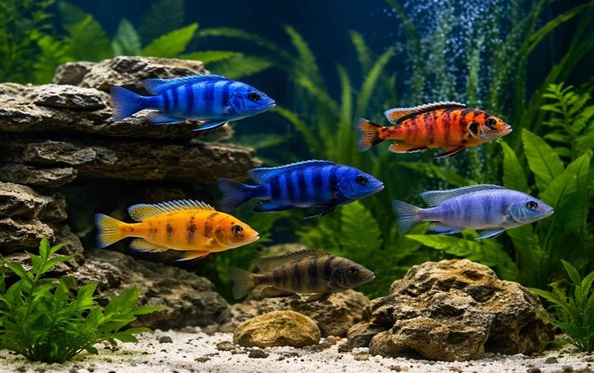
Beautiful colors of red, blue, orange, and yellow, the varieties of blue, red, marble, dragon blood, eureka red, sulfur, and albino.
✓Peacock cichlids come from Lake Malawi and are beginner-friendly.
✓Plan for a 55–75 gallon tank with a sandy bottom, rocks for hiding, and good filtration.
✓Keep the temperature at 75-82 F, pH 7-8.6, and hardness 6-10 DGH.
✓Keep 1 male with 3-5 females to reduce aggression.
✓Avoid too much fatty food to prevent bloat.
FAQs
Is the peacock cichlid fish easy to take care of as a beginner?
Yes, peacock fish are perfect for beginners, with just easy guidelines for caring. They are easier to handle than other African cichlid species.
What is the suggested quantity of peacock cichlids that should be set up in a tank together?
To reduce aggression and improve natural behavior, keep 1 male with 3-5 females.
Do peacock cichlids lose their color?
Yes, peacock cichlids can lose their color when they are stressed, or because of poor water quality, illness, or an improper diet.
🐠 Was this helpful? Share it with a fellow aquarist, or tell us in the comments if you keep peacock cichlids.
This article is for general information only. Aquarium conditions vary, so if you are worried about your fish or water quality, please consult an experienced aquarist or your vet.