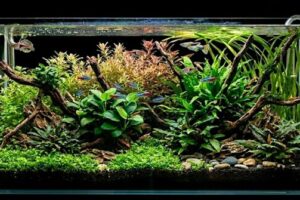
As an aquarist myself, I can indeed understand the stress you might be going through. You go to the local pet store, pick out a gorgeous, vibrant green plant, carefully tuck it into your fish tank, and wait for your underwater jungle to grow.
But, within a few days, you realise a real nightmare. The leaves start turning yellow. Then they get see-through, turn to mush, and literally dissolve right before your eyes.
You would perhaps get annoyed and prepare to throw what remains of the plant away. But wait – the plant may not be dead as such. What you are witnessing is a biological phenomenon called aquarium plant melt.
Let us understand what a plant melt in an aquarium is, why it happens, and how to stop it.
Why do Aquarium Plants Melt?
To understand why plants melt in an aquarium, you should understand a bit about biology and the pet industry.
The Greenhouse Switch
The plants you buy are not necessarily grown underwater in a nursery. They have their roots in water and other parts in air. This is because the nurseries want their plants to grow faster. Also, growing them in air will make sure that they do not get covered in algae.
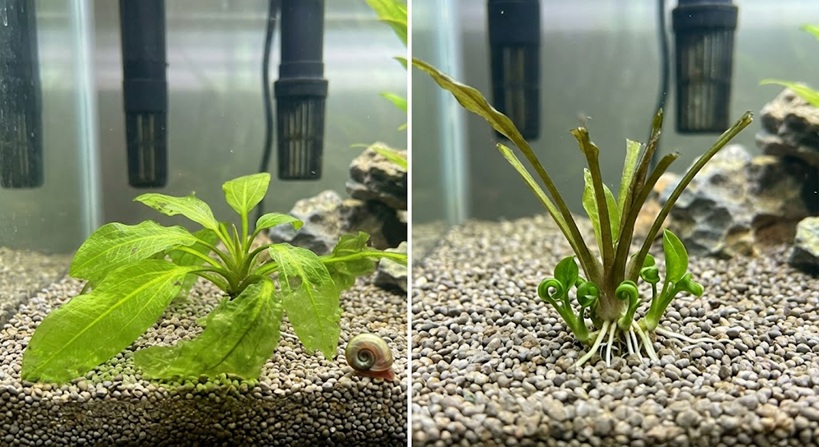
The plant panics when it is put underwater. It deliberately destroys its old leaves to save its own life. It lets them melt away so it can redirect all its energy into growing brand-new, water-adapted submerged leaves.
Popular varieties like the beautiful Cryptocoryne, massive Amazon Swords, and even sturdy Anubias are notorious for throwing these kinds of tantrums.
Shock on the day of moving
Even if your plant was grown underwater at the store, changing tanks is a major shock to its system. Think of it like moving to a new country. The sudden shift in water parameters—like a change in water hardness, temperature, or moving from intense store lighting to your home aquarium LED light—can cause the plant to drop its old leaves as it adjusts to your tank’s unique chemistry.
Plant Melt vs Root Rot – A Comparison
When a plant goes through the process of plant melt, it is not yet dead. In fact, plant melt is completely different from root rot.
To understand the differences, you should use a few techniques to inspect the plant.
- Check the Leaves: If the outer, older leaves are turning to mush but the very center crown of the plant still looks solid and green, it’s just aquarium plant melt. If the entire plant turns jet black or completely clear from top to bottom, it’s likely dying.
- The Tug Test: Give the plant a very gentle tug. If it stays anchored and feels firm, the roots are healthy. If it pulls right out of the gravel like wet tissue paper, and the roots look brown, stringy, and smell bad, it has plant root rot and cannot be saved.
- Look for Baby Leaves: Look closely at the very base of the plant after a week or two. Do you see tiny, tightly curled green leaves pushing through? That’s your reward for being patient—those are the new, permanent underwater leaves!
| Check | Plant melt | Root rot |
|---|---|---|
| Leaves | Outer, older leaves turn to mush; center crown stays solid and green | Entire plant turns jet black or completely clear, top to bottom |
| Tug test | Stays anchored and feels firm; roots are healthy | Pulls out like wet tissue paper; roots brown, stringy, and smelly |
| New growth | Tiny, tightly curled green leaves appear at the base after a week or two | Cannot be saved |
How to Help Your Melting Plants?
If you notice your plants melting, you should take extra care when handling them.
Clean up the melting leaves
Don’t leave the melting, gooey leaves in your tank. As they rot, they break down into ammonia, which can pollute your water, stress your fish, and trigger a massive aquarium algae bloom. Grab a pair of clean scissors and gently snip off the dying leaves near the base. If you leave them in the tank, they can disturb the nitrogen cycle in your aquarium.
Leave the plants alone
The absolute worst thing you can do to a melting plant is move it around the tank because you think it doesn’t like the spot. Every time you pull a plant out of the gravel, you break its tiny micro-roots and force it to restart the acclimation process all over again. Pick a spot, plant it, and let it stay there.
How to Avoid Melting Next Time?
Plant Melting is a natural phenomenon. You may not be able to stop it in its entirety. However, you can check out the plants that are less likely to melt. Next time you shop, look for tissue culture plants. These are tiny plants grown in sterile laboratory cups filled with a special gel. Because they grow in super-high humidity, they adapt to aquarium life much faster and experience significantly less aquarium plant melt.
Watching your plants dissolve can be scary, but remember: it’s just nature hitting the reset button. Keep the roots fed, clean up the messy leaves, and in a few weeks, your patience will be rewarded with a lush, green underwater paradise!
✓Plant melt is a plant shedding old leaves to grow new, underwater-ready ones. It is not the same as root rot.
✓Healthy signs: a solid green center crown, firm roots, and tiny curled baby leaves after a week or two.
✓Snip melting leaves near the base so they do not turn into ammonia.
✓Once planted, leave the plant where it is.
✓Next time, look for tissue culture plants.
Frequently Asked Questions (FAQs)
Is my aquarium plant dead if the leaves are melting?
Not necessarily. If the outer, older leaves are turning to mush but the center crown still looks solid and green, it is most likely plant melt. If the whole plant turns jet black or completely clear from top to bottom, it is likely dying.
Which aquarium plants are known to melt?
Popular varieties like Cryptocoryne, Amazon Swords, and even sturdy Anubias are notorious for melting after they are moved into a new tank.
Should I remove melting leaves from the tank?
Yes. Melting leaves break down into ammonia, which can pollute your water, stress your fish, and trigger an algae bloom. Gently snip the dying leaves near the base with clean scissors.
How long does it take for a melted plant to recover?
Look closely at the base of the plant after a week or two for tiny, tightly curled green leaves. These are the new, permanent underwater leaves, and in a few weeks a healthy plant can look lush again.
Can a plant with root rot be saved?
No. If the plant pulls right out of the gravel like wet tissue paper, and the roots look brown, stringy, and smell bad, it has root rot and cannot be saved.
🐠 Was this helpful? Share it with a fellow aquarist, or tell us in the comments if your plants have melted.
This article is for general information only. Aquarium conditions vary, so if you are worried about your fish or water quality, please consult an experienced aquarist or your vet.