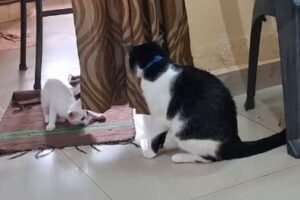
Have you ever noticed your cat sleeping and paid close attention to it? I bet you might have noticed its paws stretching or flying in the air, or its whiskers twitching. Or as I have noticed it with my Chingu, when she has those soft meows while sleeping. These are cute escapades that our cats are indulging in, but more than that, these signs are a clear indication that your cat is having a dream.
The science behind how cats dream shows that there is a remarkable similarity between how we humans dream and how cats do it.
The Science Behind Cat Sleep – How do Cats Sleep?
The sleep cycle of cats resembles that of humans and, of course, most other mammals. Cats have both non-rapid eye movement (NREM) and rapid eye movement (REM) sleep stages in their sleep just like we humans do.
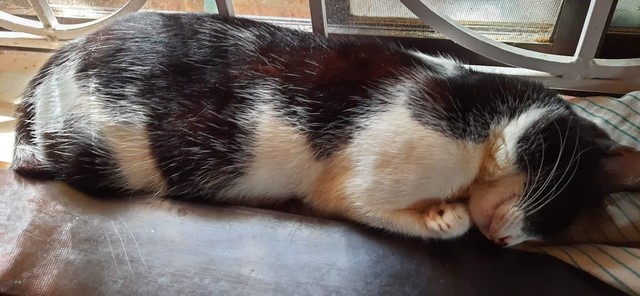
Of course, cats have a polyphasic sleep cycle, and thus they sleep multiple times a day in batches, instead of a single long nap that we are used to. Each of their naps stretches anywhere between just under 15 minutes to up to 2 hours.
Research in the Sleep Foundation indicates that cats sleep for around 12 to 16 hours a day. Some cats may even sleep for over 20 hours. There are several reasons why cats spend such a long time sleeping. Some of these reasons include energy conservation, memory consolidation, and physical recovery from hunting (something cats retain from their days in the wild).
The different stages in a cat’s sleep cycle include –
The proof that a cat can dream during its sleep came from the research conducted by French neuroscientist Michel Jouvet in the 1960s. His experiments showed that cats have a specific element in their brainstem – known as the pons – that causes dreams. It was also concluded that the element stops the cat from physically acting out the dream during REM sleep.
When this pons was disabled, cats exhibited strange behaviour where they acted upon all their dreams, all the while their brain waves indicated that they were in deep sleep. This experiment clearly indicated that cats can dream.
The Physical Signs that Your Cat is Dreaming
So, now that we know cats are capable of dreaming, how can you know that your cat is dreaming? What are the signs that indicate your cat is dreaming? How do you find out your cat is dreaming?
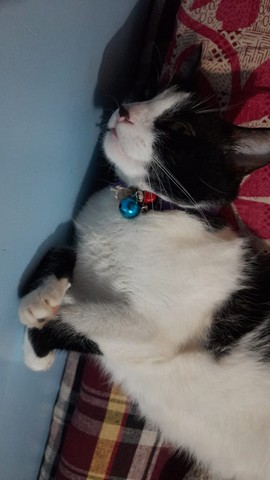
Cat owners can easily identify when their pets are dreaming by observing specific physical behaviors during sleep –
Facial Movements
Here are a few facial movements that show your cat is dreaming –
- Whiskers twitching rapidly
- Ears flicking or rotating
- Mouth movements or silent meows
- Eyes moving behind closed lids
Body movements
In addition to the facial movements, cats may also show a few bodily movements –
- Paws paddling as if running or hunting
- Tail swishing or twitching
- Leg jerks or kicking motions
- Overall body twitches
Vocalisations
In some special and rare cases, you may find your cat exhibiting vocalisations –
- Soft meows, chirps, or purring
- Growling or hissing sounds
- Chattering noises similar to hunting calls
According to MSD Manual, these movements occur because the brain continues sending motor signals during dreams, but the body’s natural paralysis mechanism prevents full execution of these actions.
What Do Cats Dream About?
Well, we cannot have access to what cats dream about exactly. But, there are scientific studies that have shed light on what your cat may be dreaming about. Do cats dream like humans? We will find out.
Some of the possible things that cats may be dreaming about include –
Do Cats Have Nightmares?
Just the other day, I witnessed something strange with our pet cat, Chingu. She was having a sound sleep just beside me on her favourite chair. All of a sudden, out of nowhere, she leapt out of her sleep, and stared at me with a startled look. It was obvious that she was frightened. She kept crying for a while until she became normal after a while. Obviously, she had a bad dream.
Just as cats can have pleasant dreams, evidence suggests they can also experience nightmares or disturbing dreams.
Signs that a cat may be having a nightmare include –
Signs of a nightmare
- More intense or agitated movements during sleep
- Distressed vocalizations like growling or fearful meows
- Waking up suddenly and appearing frightened or disoriented
- Defensive postures immediately upon waking
Not every cat experiences nightmares. Even when they do, it might have something to do with what happened during the day and recent times. However, cats that have gone through trauma are more likely to experience nightmares quite frequently. This behaviour is observed to be much more prevalent in rescue cats or those who lived as strays.
Sleep and Dream Patterns in Cats as Per Age
As cats age, their sleep patterns and dreaming behaviors change significantly.
- Sleep up to 20 hours per day
- Experience more REM sleep and dreaming
- Show more frequent twitching and movement during sleep
- Need extensive sleep for neurological development
- Sleep 12-16 hours per day
- Balanced REM and NREM sleep cycles
- Moderate dreaming activity
- Efficient sleep-wake transitions
- May sleep more hours but with less efficient REM sleep
- Reduced dreaming frequency
- More frequent brief awakenings
- Potential sleep disorders related to cognitive changes
Sleep and Dream Disorders to Look for in Cats
| Normal Dream Signs | Concerning Sleep Disorder Signs | Action Required |
|---|---|---|
| Brief whisker twitching | Seizure-like movements >10 seconds | Veterinary consultation |
| Soft paw paddling | Loss of bladder/bowel control | Immediate vet visit |
| Quiet vocalizations | Violent thrashing | Emergency care |
| Easy awakening | Inability to wake cat | Medical evaluation |
A slight twitching and bodily movement during sleeping or dreaming may be normal and harmless. However, excessive or concerning behaviours may need to be addressed by a veterinarian. REM Sleep Behaviour Disorder (RBD) can occur in cats when the natural muscle paralysis fails, leading to violent or excessive dream enactment.
Some of the warning signs that you should specifically pay attention to include –
Warning signs
- Seizure-like rigid movements lasting more than a few seconds
- Loss of bladder or bowel control during sleep
- Inability to wake the cat during episodes
- Confusion or aggression immediately upon waking
- Excessive vocalisation that seems distressed
How to Help Your Cat Sleep Well
Conclusion
The science behind how cats dream lets us know the complexity of sleep psychology in cats. Based on several studies, we today know that cats experience rich, vivid dreams primarily during REM sleep, likely processing their daily experiences, hunting instincts, and social interactions.
The next time you observe your cat’s whiskers twitching or paws paddling during sleep, you’re witnessing the fascinating phenomenon of feline dreaming—a window into their inner world that connects them to the broader mammalian experience of sleep and consciousness. This understanding not only deepens our appreciation for our feline companions but also highlights the importance of providing them with environments that support healthy, restorative sleep and the dreams that come with it.
✓Cats have both NREM and REM sleep, just like humans, and dream mostly during REM sleep.
✓Cats sleep around 12 to 16 hours a day, in many short naps, and are most active at dawn and dusk.
✓Twitching whiskers, paddling paws, and soft meows are signs of dreaming.
✓Cats can have nightmares, especially rescue cats and strays.
✓Seizure-like movements, loss of bladder or bowel control, violent thrashing, or being unable to wake your cat need a vet.
Frequently Asked Questions (FAQs)
Do cats dream?
Yes. Cats have both non-rapid eye movement (NREM) and rapid eye movement (REM) sleep, just like humans, and dreaming mostly happens during REM sleep. In the 1960s, French neuroscientist Michel Jouvet’s research with cats showed that when the pons region of the brainstem is disabled, cats act out their dreams.
What do cats dream about?
We cannot know exactly, but studies suggest cats may dream about hunting and predatory behaviour, their daily experiences, social interactions, and familiar spaces like favorite sleeping spots and climbing areas.
Do cats have nightmares?
Evidence suggests that cats can have nightmares or disturbing dreams. Signs include intense or agitated movements, growling or fearful meows, waking suddenly and appearing frightened, and defensive postures upon waking. Cats that have gone through trauma, such as rescue cats and strays, may have them more often.
Why does my cat twitch while sleeping?
Twitching of the whiskers, ears, paws, or tail usually happens during REM sleep. The brain continues sending motor signals during dreams, but the body’s natural paralysis mechanism prevents full execution of these actions.
How many hours do cats sleep a day?
Cats sleep for around 12 to 16 hours a day, and some cats may even sleep for over 20 hours. Kittens can sleep up to 20 hours a day.
Are cats nocturnal?
No. Cats are crepuscular, which means they are most active at dawn and dusk. They are also polyphasic sleepers, sleeping in many short intervals instead of one long chunk.
How long do cat naps last?
Each nap stretches anywhere between just under 15 minutes to up to 2 hours. In one nap, a cat cycles through light sleep (NREM) and deep dream sleep (REM), often waking up alert in between.
When does a cat start dreaming after falling asleep?
REM sleep, the stage most critical for dreaming, occurs within about 20 minutes of falling asleep.
How do I tell dreaming from a seizure in a cat?
Dream movements are brief: whisker twitching, soft paw paddling, and quiet vocalizations, and the cat wakes up easily. Seizure-like movements lasting more than 10 seconds, loss of bladder or bowel control, violent thrashing, or being unable to wake your cat need veterinary care right away.
What is REM sleep behaviour disorder in cats?
REM Sleep Behaviour Disorder (RBD) can occur in cats when the natural muscle paralysis fails, leading to violent or excessive dream enactment. If you see this, consult your vet.
🐱 Was this helpful? Share it with a fellow cat parent, or tell us in the comments what your cat does in its sleep.
This article is for general information only and is not a substitute for professional veterinary advice. If you are worried about your cat’s sleep or behaviour, please consult your vet.