
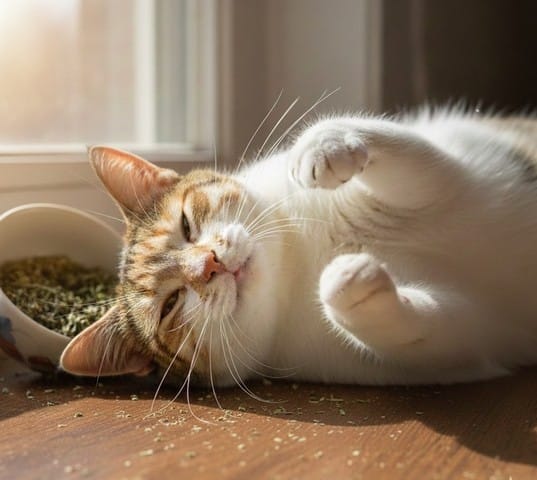
Have you ever watched your cat meowing, rolling and rubbing all over a little dried herb? You might have come across a thing called catnip. But, as a responsible cat owner, we are sure that you might have thought about a few pertinent questions: Is catnip really safe for your cat? Can my cat get addicted to catnip? Could catnip cause any harm to my cat?
Good News – Catnip is widely considered safe and non-toxic for cats. However, it is important to understand how it works, and why some cats do not respond to the catnip.
This comprehensive guide breaks down everything you need to know about catnip safety, its effects on cat behavior, potential risks, and safer alternatives—all backed by veterinary expertise.
What is Catnip?
| Aspect | Details |
|---|---|
| Active Compound | Nepetalactone (essential oil) |
| Affected Cats | ~60-70% of cats respond |
| Response Age | 3-6 months old (sometimes up to 1 year) |
| Effect Duration | 10-15 minutes per session |
| Refractory Period | ~2 hours before sensitivity returns |
| Smell vs. Eating | Sniffing = stimulation; eating = relaxation |
| Safe Dosage | 1 tablespoon of dried catnip maximum |
| Toxicity | Non-toxic and non-addictive |
| Common Forms | Dried leaves, toys, sprays, and fresh plants |
Catnip (Nepeta cataria) is a perennial herb from the mint family. It is native to Central Asia and Europe, but it is found worldwide today. It contains a volatile oil, nepetalactone, found primarily in the plant’s leaves and stems.

The nepetalactone doesn’t affect cats through taste—it works through smell. When your cat sniffs catnip, nepetalactone binds to receptors in the nasal tissue and activates the vomeronasal gland (also called the Jacobson’s organ), a special sensory pathway in the roof of their mouth. This organ is responsible for controlling emotions and social behaviour in cats.
Catnip is even edible for humans! Brewed as tea, it’s traditionally used for its calming properties, and concentrated nepetalactone serves as a natural mosquito repellent.
What Does Catnip Do to Cats?
What catnip does to cats depends on the way it is consumed. The effects of eating it differe considerably as opposed to what happens when it sniffs the herb.
When Cats Smell Catnip (Sniffing)
When a cat sniffs catnip, the typical response is stimulation and euphoria:
-
Increased playfulness and hyperactivity
-
Rolling, rubbing against objects, and kneading
-
Purring, meowing, and vocalizing more than usual
-
Pouncing, jumping, and intense physical activity
-
Drooling and facial rubbing
-
In some cases, mild hallucinations (batting at invisible objects)
-
Behavioral mimicry of cats in heat (both males and females may display this)
Research published in Vettic suggests that the cat will show these symptoms for around 15 to 20 minutes. However, after the cat returns to normal behaviour, it will be immune to the effects of the catnip for around two hours.
When Cats Eat/Ingest Catnip
Consumption produces the opposite effect:
-
Calm, relaxed, and drowsy state
-
Reduced excitement or anxiety
-
Sedative effect
-
Generally, more subdued behavior
You may also be interested in the following –
Is Catnip Safe for Cats?
Yes, Catnip is completely safe for cats. According to the veterinarians, catnip is never known to cause any health issues for the cats.
- It is non-toxic – It contains no harmful or poisonous compounds.
- It is non-addictive – Cats cannot become dependent on it, despite how enthusiastically they respond
- It is self-regulating – Many cats understand that they have had enough and stop on their own.
- Appropriate for all cats – It is safer to kittens, adult cats, or even senior cats across all breeds.
Potential risk factors of Catnip
Even when catnip is safer, it does not mean it is risk-free. Overuse and excessive use can result in mild or moderate side effects,
Digestive Upset
The most common concern is gastrointestinal (GI) distress from eating too much catnip:
-
Mild nausea and vomiting
-
Diarrhea
-
Loss of appetite
-
Mild abdominal discomfort
Excessive catnip exposure can occasionally cause:
-
Overstimulation — Hyperactivity that leads to unintended scratching or jumping
-
Aggression — Some cats become overly aggressive with other pets or humans
-
Anxiety — Paradoxically, too much stimulation can cause stress in sensitive cats
-
Temporary loss of coordination — Dizziness or wobbly movement (very rare, with extreme overconsumption)
Desensitization
The biggest risk? Loss of effectiveness.
If your cat has constant access to catnip, they can become desensitized to it over time, meaning the same catnip that once sent them into ecstasy will barely elicit a yawn. This is why veterinarians recommend limiting sessions to once or twice per week.
| Situation | Recommendation | Reason |
|---|---|---|
| Pregnant cats | AVOID | May stimulate the uterus and trigger premature labor |
| Overly anxious/aggressive cats | LIMIT or AVOID | Can amplify stress or aggression |
| Cats with heart/lung disease | CONSULT VET | Rare risk of temporary BP elevation |
| Senior cats with mobility issues | CAUTION | Physical exuberance could cause falls or injury |
| Cats with nervous system disorders | AVOID or CONSULT VET | May exacerbate underlying conditions |
| Kittens under 6 months | SAFE but INEFFECTIVE | Most young kittens don’t respond |
Are Catnip Toys Safe?
If you have aggressive or mischievous cats, it is quite common to use toys infested with catnip. While it may be quite common, are these catnip toys safe for your cats?
It is important to pay a good attention to the proper supervision and the quality of the toy.
✓ Inspect toys regularly — Check for loose seams, torn fabric, or exposed stuffing
✓ Remove small parts — Plastic eyes, bells, ribbons, and strings can become choking hazards if your cat chews them off
✓ Supervise initially — When introducing a new catnip toy, watch your cat’s behavior to ensure they don’t try to ingest the toy itself
✓ Choose high-quality toys — Invest in toys made from durable, non-toxic materials. Avoid toys with pesticide-treated catnip
✓ Store safely — Keep catnip toys out of constant reach to prevent desensitization. Rotate toys weekly
✓ Limit access time — Use catnip toys as interactive play items (5-10 minutes) rather than leaving them out all day
✓ Use catnip 1-2 times per week in 5-10 minute sessions
✓ Limit to 1 tablespoon of dried catnip per session (less if fresh)
✓ Inspect toys regularly for damage or small parts
✓ Rotate enrichment items — Alternate between catnip, silvervine, and other toys to prevent desensitization
✓ Store dried catnip in the freezer in an airtight container to preserve freshness
✓ Supervise initial introduction and monitor for behavioral changes
✓ Consider your cat’s age and health — Adjust usage for kittens, seniors, and cats with health conditions
✓ Use catnip as enrichment, not a substitute for interactive play, exercise, and veterinary care
✓ If your cat doesn’t respond, try alternatives like silvervine (80% success rate) or valerian root
Conclusion
Catnip is a safe, non-toxic and non -addictive tool that helps you enrich the life of your cat. According to a majority of vet experts, catnip does not pose any danger to most of the cats. If you supervise the usage properly, your cats should be able to live a happy and contented life.
However, responsible use is the key to ensuring better safety. According to Humane World, about 30% of cats don’t respond at all—not because anything’s wrong with them, but because genetics don’t work in their favor.
Your cat’s health and happiness are your priority. When in doubt, consult your veterinarian—they know your cat best and can provide personalized guidance based on your pet’s unique needs.
Disclaimer: This blog is for general informational purposes only and is not a substitute for professional veterinary advice, diagnosis, or treatment. Always consult a licensed veterinarian who knows your cat’s medical history before introducing catnip, silvervine, valerian, or any new product, especially if your cat is pregnant, a senior, or has existing health conditions. Never ignore or delay seeking professional advice because of something you have read on this website.
FAQs
Is it dangerous to leave catnip toys out all the time?
It isn’t dangerous, but it is never ideal to leave the catnip near your cats all the time. Constant access leads to rapid desensitization, meaning your cat will lose interest much faster.
Can catnip cure behavioral problems?
No. While catnip provides enrichment and can temporarily redirect unwanted behavior (like scratching), it’s not a cure for underlying issues like anxiety or aggression. Expert vets can best address these behavioural issues.
Is homemade or store-bought catnip safer?
Quality matters more than source. Store-bought catnip from reputable brands is standardized and often tested for contaminants. Homemade catnip (if you grow it) is fresh and potent but requires proper drying and storage to avoid mold.




Add Comment