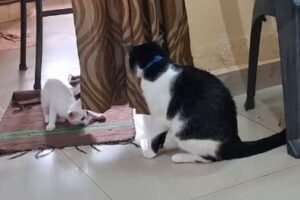
Have you ever found your cat sitting by your door, almost as if standing guard? At first, it may seem like a cute habit, but is there a deeper reason behind it? Cats are known for their mysterious feline behavior patterns, and guarding the door is one that often leaves pet owners wondering—are they protecting us, marking their territory, or simply being curious?
There are several studies that shed light on the cat’s behaviour when it comes to the human environment.
In this article, we’ll uncover why your feline friend may be watching at your door and what it really means for your bond with them.
Have you ever wondered why your cat guards your door? Is it to protect you, or is it some other quirky behaviour that cats exhibit for a strange reason? Let us unearth the truth.
Why Does Your Cat Guard Your Door?
Well, there are several reasons that your cat may decide to guard your doorway. Don’t be flattered when I say your cat does it to show its love for you. No, it may not be solely for that particular purpose.

How to tell why your cat is guarding the door
| What you notice | Likely reason |
|---|---|
| Your cat meows or paws at you, then settles by the door | Attention-seeking |
| Your cat only sits at the door when it is closed | Curiosity about the outside world |
| Your cat watches closely when there are sounds or neighbourhood cats outside | Territorial behavior |
| Your cat is calm, relaxed, and moves away after a while | Habit or protective behavior |
| Your cat gets distressed as you prepare to leave, or while you are away | Possible separation anxiety |
1Your cat is seeking your attention
Of course, it may look as if your cat is guarding the door. But the cat is asking you for your attention. Blocking the doorway is a clever art that cats display to seek your love. Many vets and pet behavior sources list attention-seeking as a common reason that the cat may choose to sit at the door.
Cats have learned that the door is the center of attention for any home. That is what cat psychology teaches them. Blocking the door – according to its logic – is the best way to demand recognition. Guarding the door is one of the most common antics that we love about our cats. And as for me, whenever I see my cat doing that, I invariably pick her up and pet her. Believe me, she is quite happy whenever I do that. Some studies suggest that cats can pick up on human emotions, so your cat’s behavior at the door may sometimes reflect your mood.
2Your cat is just being curious
Cats are curious animals by instinct. Their curiosity about things around them is boundless. A closed door can act as fuel to this feline instinct. As you might have seen, outdoor cats explore the insides of a closed space, while indoor cats try to gain access to the outside world.
I have observed that with my cat. When the door is open, she is much less interested in what’s happening outside. But the moment I close the door, she jumps out from where she has been and sits by the closed door. In many cases, a cat may choose to guard the door just because it can have a clear view of the activity in multiple rooms easily.
The outside world is a challenge to them. They want to explore it. When they can’t, they guard the door as the gatekeepers to the unknown things outside.
3Your cat is protecting you
Well, that should be the cutest feeling if that’s true. And I like to think it is true in many cases. Of course, cats are aloof and solitary. But, they have a reason to preserve a cohesive relationship with you. That is precisely why they might think of protecting you. According to Hill’s Vet, some cats move into the “bodyguard mode” and one of the signs is to guard your door.
They realize that the threats and outside elements enter the house through the doors. Guarding your door is your cat’s own way of protecting you. Isn’t that something charming? I love that feeling.
4It is just a habit for your cat
If you notice your cat guarding the door for a long time, there may be no specific reason behind it. It can just be a habit that your cat has developed. They get habituated and like the simple familiarity that comes with it.
5Your cat is being territorial
Cats are territorial by nature. Your cat knows that people or anyone else enters the home through the door. That is why your cat blocks access to the door. If your locality has cats in the neighborhood, you may notice the habit of guarding the door quite often. Some cat owners have found that closed doors annoy the cat and perhaps disturb its territorial instincts, and thus, they typically decide to guard a closed door.
Cats guard doors and block access to food bowls, sleeping spots, or litter boxes. Closed doors or even open doors are the invisible boundaries for your cat. They guard the region, indicating and telling the world that “this is my territory”.
Separation Anxiety vs. Normal Guarding Comparison
| Behavior Aspect | Normal Doorway Guarding | Separation Anxiety |
|---|---|---|
| When It Occurs | Throughout the day, regardless of owner’s presence | Primarily when owner is leaving or is absent |
| Duration | Intermittent; cat moves away after brief periods | Persistent; may last entire duration of owner’s absence |
| Vocalization | Occasional meowing or chirping | Excessive, loud, or distressed meowing/crying |
| Body Language | Alert posture, ears forward, relaxed tail | Pacing, inability to settle, tail tucked or thrashing |
| Other Behaviors | Normal eating, drinking, and bathroom habits | Refusal to eat, inappropriate elimination, excessive grooming |
| Response to Distraction | Easily redirected with toys or treats | Ignores toys and treats; returns to doorway obsessively |
| Triggers | Door activity, sounds, movements beyond door | Owner’s departure cues (picking up keys, putting on shoes, grabbing purse) |
| At Night | Minimal or no guarding behavior | May intensify; disrupts sleep patterns |
| Frequency Pattern | Consistent but not all-consuming | Escalates before owner leaves, peaks during absence |
| Post-Return Behavior | Normal greeting; quickly resumes activities | Excessive neediness, clinginess, frantic greeting behavior |
| With Multiple Cats | May involve territorial conflict | Anxiety affects individual cat; other cats may be unaffected |
| Physical Symptoms | None; cat appears healthy | Visible stress signs, weight loss, skin issues from over-grooming |
| Response to Confinement | Accepts being gated away from door | Panic, destructive behavior, or self-harm attempts |
Should You Stop Your Cat From Guarding the Door?
As long as your cat is not hurting anyone entering the home through the door, there is no reason why you should stop it from guarding the door. In fact, the cat might have developed the habit as part of its routine. Stopping it from doing that can interrupt it and make it get annoyed. And you know what your cat can do if it gets annoyed.

However, if you think your cat is guarding the door due to separation anxiety, it may be important to provide it with a reassuring or comfortable environment.
When Door Guarding can be a Problem?
- Excessive vocalization combined with door blocking
- Destructive scratching at doors
- Elimination outside litter box near doors
- Signs of separation anxiety (about 13% of cats in one study)
In fact, your cat likes living just as it wants to. Cats are highly independent. Also, cats are territorial creatures and tend to mark their territories according to their comfort level. As long as the cat is not scratching the door and damaging it, I find no reason why it should not be allowed to guard it. You have a watchman without the need to pay; what’s the harm in it?
Keep Your Cat Safe at the Door: Tips to Prevent Escapes
A cat that waits at the door can slip out the moment someone opens it. If your cat is indoor-only, a few simple habits can keep it safe.
If Separation Anxiety Is Behind It: What Can Help
If you think your cat is guarding the door because it is anxious when you leave, a few small changes can help.
Veterinary Red Flags: When to Call Your Vet
Veterinary Red Flags: When to Call Your Vet
- Sudden behavior changes
- Aggression beyond guarding
- Excessive vocalization
- Appetite or eating changes
- Inappropriate elimination at doorways
- Anxiety beyond door-guarding
- Repetitive/obsessive behaviors
- Self-injury or excessive grooming
In Conclusion
There are several reasons for your cat to guard your door. But, close observation should reveal the real purpose of your cat indulging in this behavior. Once you understand the exact reason, you can take any corrective action if needed or leave your cat to enjoy what it loves the most.
✓Door guarding is usually normal. Common reasons are attention, curiosity, protection, habit, and territory.
✓Normal guarding happens throughout the day; separation anxiety peaks when you leave or are away.
✓You usually do not need to stop it, unless it harms people or damages the door.
✓Prevent escapes with a baby gate, an ID tag or microchip, and a window perch.
✓Call your vet for sudden changes, aggression, excessive vocalization, eating changes, or inappropriate elimination.
Frequently Asked Questions (FAQs)
Why does my cat sit by the door?
Cats usually sit by the door because of a mix of instinct, attachment, and curiosity. Common reasons are seeking your attention, curiosity about what is outside, territorial behavior, a feeling of protecting you, or simply habit.
Is it normal for cats to guard the door?
Yes. As long as your cat is not hurting anyone entering the home or damaging the door, door guarding is a normal part of many cats’ routines.
Is my cat protecting me when it guards the door?
It may be. Some cats seem to go into “bodyguard mode,” and guarding the door can be one of the signs. Cats also realize that outside elements enter the house through the door, so guarding it can be their way of watching over you.
Is door guarding a sign of separation anxiety?
Not usually. Normal door guarding happens throughout the day and the cat moves away after a while. Separation anxiety tends to appear when you are leaving or away, with persistent, distressed meowing, pacing, refusing food, or inappropriate elimination. In one 2020 study of 223 cats, about 13% showed at least one sign of separation-related problems.
Should I stop my cat from guarding the door?
Usually there is no need, unless the behavior is harming someone or damaging the door. Stopping a long-standing habit can annoy your cat. If you think anxiety is behind it, provide a reassuring, comfortable environment and talk to your vet.
Why does my cat sit at a closed door?
Cats are curious by instinct, and a closed door can fuel that curiosity. Indoor cats often try to get to the outside world, and some cats sit at the door simply because it gives them a clear view of activity in several rooms.
How can I stop my cat from running out of the door?
Keep a baby gate or a second barrier near the entrance, teach your cat to move away from the door on cue, give it a window perch and play sessions so the door is less exciting, and make sure your cat wears ID or is microchipped.
When should I call the vet about door guarding?
Call your vet if you see sudden behavior changes, aggression beyond guarding, excessive vocalization, changes in appetite, inappropriate elimination at doorways, anxiety beyond door guarding, repetitive or obsessive behaviors, or self-injury and excessive grooming.
🐱 Was this helpful? Share it with a fellow cat parent, or tell us in the comments why your cat guards the door.
This article is for general information only and is not a substitute for professional veterinary advice. If you are worried about your cat’s health or behavior, please consult your vet or a cat behaviorist.